Jet Lag with Kids: What Actually Works on Long-Haul Family Trips

Beating the Jet Lag on the North Shore of Oahu
I’ve tried everything. The gentle bedtime shift. The no-screen rule. The magical thinking that says, “Maybe this time it’ll be different.” It’s never different.
The only thing predictable about jet lag with a child is that it will break you a little and make you stronger at the same time, like childbirth or assembling IKEA furniture with your spouse.
I’m writing this as a luxury travel advisor, former ER nurse and family nurse practitioner, and mom who plans family trips around actual human limits, not vacation fantasy math. So here is what actually works for us on long-haul family trips to Europe, Hawaii, and beyond.
Save This
The Jet Lag Cheat Sheet
If you only need the short version, here it is.
- Do not start the trip with an overtired child.
- Do not count on a magical pre-trip bedtime shift.
- Try to line flights up with sleep when you can.
- Read a book and turn off the screen if sleep is the goal.
- Once you land, switch to local time and crawl there slowly.
- Do not schedule anything early the first morning in Europe if you are coming from somewhere west of it.
- Protect sleep more fiercely than your dinner reservations.
- Bring snacks. Always.
Before the Flight: Do Not Begin With an Overtired Child
Let’s start with Europe. Everyone tells you to get ahead of the time change. “Just shift bedtime a little earlier each night before you leave,” they say, like this is a houseplant you’re slowly rotating toward the light, not a child with opinions.
In theory, yes. In practice, all that happens is your child becomes overtired, sleeps terribly the night before the flight, and you board the plane already fantasizing about room service and a hotel bed you won’t see for twelve more hours.
So now I don’t even try to adjust beforehand. I just make sure everyone is well rested before we go. That means sticking to bedtime in the nights leading up to the trip. Ideally it’s an early bedtime, but honestly, I’ll settle for “not chaotic.”
Because nothing is worse than taking off for an international flight with a child who’s operating on 60 percent battery and one string cheese.
During the Flight: Pajamas, Books, and Lowered Expectations
When it comes to flights, I try to book one that lines up with sleep. A 7 or 8 p.m. departure is the dream. A 5 p.m. flight is less ideal, but I make it work.
Once we board, I try to make the whole thing feel like bedtime, or at least bedtime’s less glamorous cousin. Pajamas help. Reading a book helps. Turning off the screen helps. Do not assume your child is going to peacefully doze off in the glow of a screen unless that is already part of your normal life at home. Some kids can. Some absolutely cannot.
Some kids also have the opposite reaction to anything people assume will make them sleepy. Unless you’d like to find out at 35,000 feet that your child is now turbocharged and chatty.
The real goal on the flight is not perfection. It is enough rest that you can land and function like semi-reasonable members of society.
After You Land: The Slow Crawl to Local Time
Once we land, here’s the rule I live by: you can only shift your child’s schedule by about 30 to 60 minutes per day.
I have hoped, prayed, and pleaded for a faster adjustment, and it has never happened.
I have also tried to keep Sebbie on New York time, which worked for two days and then crashed spectacularly when he fell asleep on the couch at 7 p.m. and woke up at 3 a.m. demanding breakfast and Lego time.
Now I shift gradually and embrace the slow crawl to local bedtime.
That means meals at local times, daylight, a manageable first day, and no heroic expectations. You are not trying to win parenting. You are trying to avoid a full emotional collapse in a beautiful place.
Europe With Kids: Do Not Schedule an Early Morning Anything
If you are flying to Europe from somewhere west of it, do not schedule anything early your first morning.
Not a walking tour.
Not a museum.
Not a private guide.
Definitely not an early morning ski school lesson with no time to adjust. I say this from experience.
Even if your child wakes up early, that does not mean anyone is functioning well. It just means your body is confused in a prettier setting.
The first full day in Europe should be gentle. Let everyone eat. Get outside. Let daylight do some heavy lifting. Do one manageable thing later in the day and call it a success. Europe is still there. You do not need to greet it while emotionally concussed. (If you are headed to Amsterdam, our 7-day Amsterdam with kids itinerary is designed with exactly this kind of pacing in mind.)
If you want help building an arrival day that does not require heroics, that is exactly what I do. Let's plan it together.
Hawaii Jet Lag From the East Coast: The Early Bird Problem

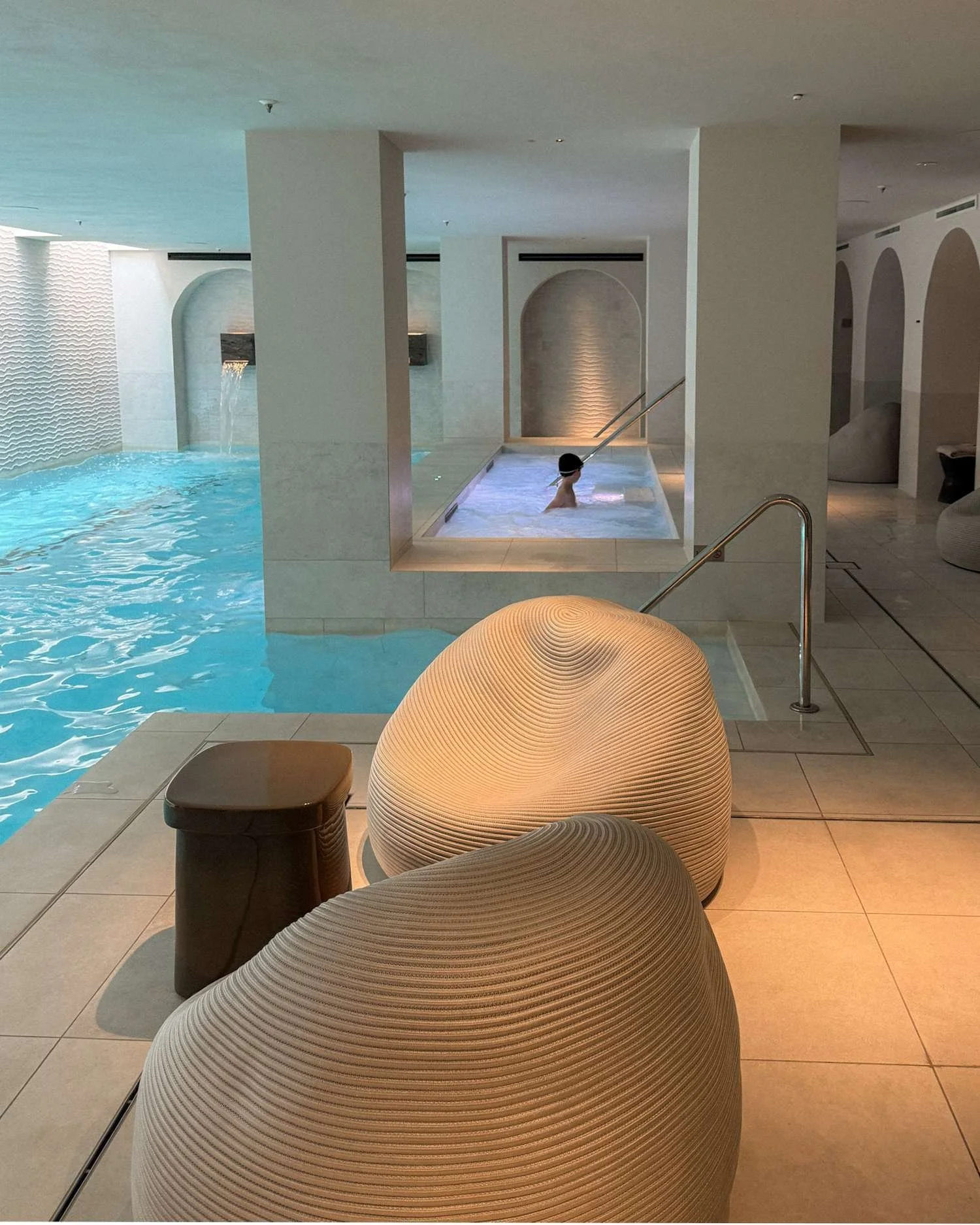
The view from the gorgeous lobby of The Ritz Turtle Bay on the North Shore of Hawaii
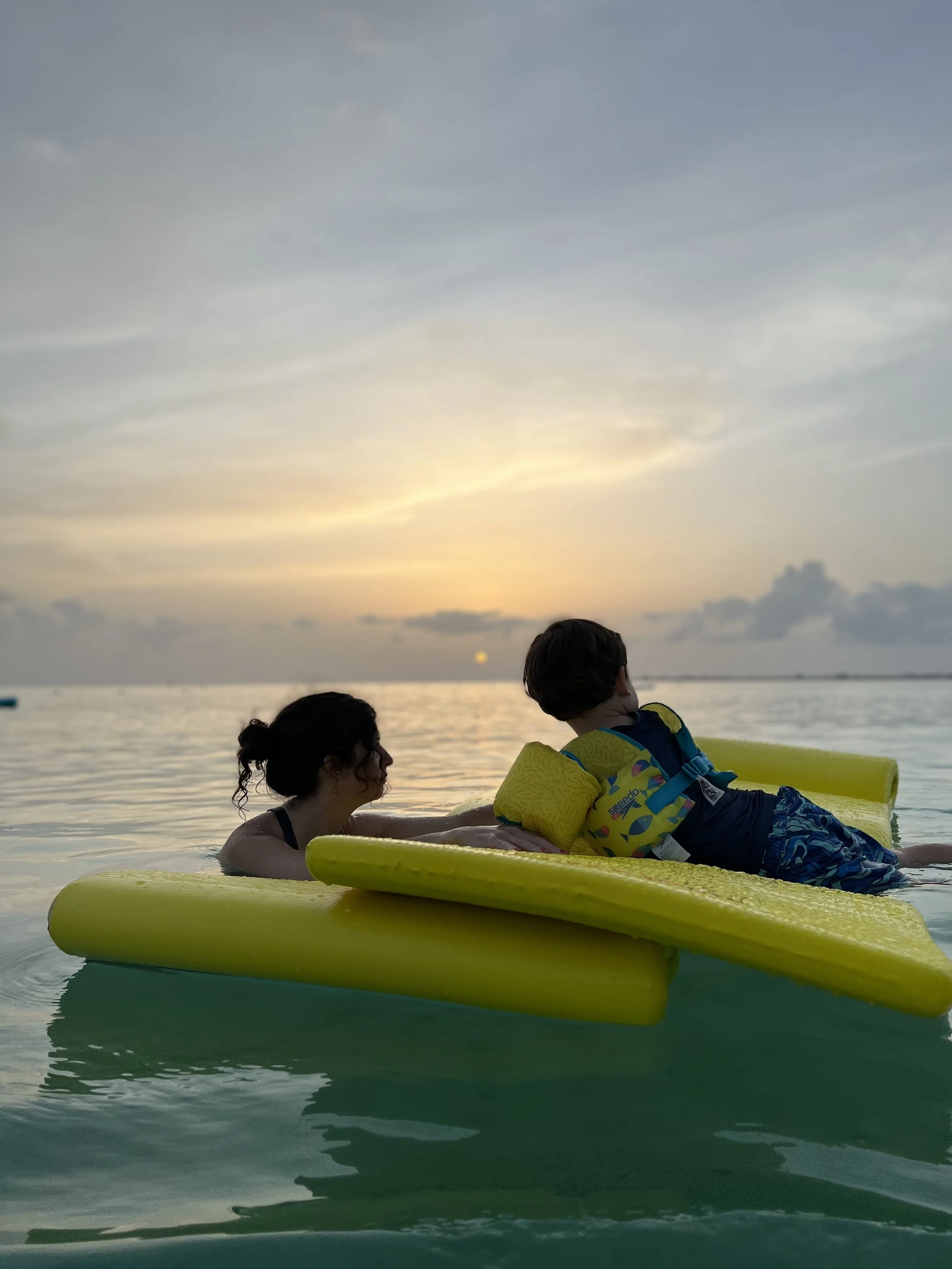
And then there’s the other direction. Hawaii. A trip I was so excited to book. We stayed at the Ritz-Carlton Turtle Bay, which was worth every early morning. Except the time difference from the East Coast is six hours, which means the first morning, my son woke up at 4:00 a.m. and was ready to start the day like we were training for some sort of child Navy SEAL program.
I tried to keep him up the first night. We pushed through with beach time and pool snacks and every ounce of energy I had left in my body. But by 4:30 p.m., he was fading fast. I managed to stretch it to six, and we were both asleep by seven. He still woke up at four the next morning. And the next. And the one after that.
So we surrendered. For the rest of the trip, we stuck to an early bedtime. Like 5:30 or 6. Yes, we missed dinner reservations.
But we also missed public meltdowns, which I consider a win.
The Early Bedtime Dilemma: Why You Should Skip Dinner Reservations
This is the part nobody glamorous wants to hear.
You cannot have a fully adjusted child, a packed sightseeing schedule, and long celebratory dinners every night on the first few days of a trip. Choose wisely.
Do not let yourself get peer pressured by family members who do not have young children. If your sister says something like, “Oh, I thought we’d be going out to dinner, I didn’t realize we’d have to be home by 5pm every night,” just smile and nod. And then go to bed.
Your sister can enjoy a kid-free meal. You’ll enjoy a morning without a tearful meltdown over the wrong kind of muffin.
And this is critical: if you’re flying to Hawaii from the East Coast and you know your child is going to wake up at 3:30 or 4 a.m. desperate for milk, plan ahead. Stock the fridge. Know where the milk is.
You do not want to be wandering a hotel room in the dark while being screamed at by a jet-lagged dairy addict. Ask me how I know this.
If your kid can hang late on vacation and sleep in, amazing. You’ve been blessed by the sleep gods. If not, I am telling you right now: make your choice wisely.
You can stay out later and enjoy the ambiance of the tiki torches, or you can go to bed early and wake up to a reasonably cheerful child who wants pancakes and isn’t screaming at the sand. You can’t have both. I have tested this theory.
What Actually Helps Most
The things that help are not especially sexy, but they are effective:
Start the trip with a rested child.
Try to line flights up with sleep.
Read a book. Turn off the screen.
Keep the first 48 hours gentle.
Feed people at local meal times.
Get outside.
Have snacks in the room.
Protect bedtime.
Lower expectations before you lower your standards.
And if you land completely wrecked and need to recover fast, Yoga Nidra is the best 30-minute reset I’ve found for travel exhaustion. It works for parents, too.
Jet lag with kids is not about creating the perfect transition. It is about reducing unnecessary suffering.
Why This Matters When I Plan Family Trips
This is also why I think so much about how a family trip starts.
A beautiful hotel is nice. A beautiful hotel that also makes the first three days easier is much better.
When I plan trips for families, I am not just thinking about where you should stay. I am thinking about the flight that gives you the best chance at sleep, the transfer that will feel least punishing after landing, the room setup that protects bedtime, and whether the first full day should involve a museum, a pool, or simply pancakes and lowered expectations.
That is the difference between a trip that looks good on paper and one that actually feels good to live through.
I plan family trips around sleep schedules, flight timing, and the kind of hotel room that does not fall apart on night one. If that sounds like what you need, I would love to help.
Start PlanningFinal Jet Lag Advice
So here’s my jet lag advice, for what it’s worth. Don’t aim for perfection. Aim for sleep. Protect it. Defend it. Adjust slowly. Ignore Instagram.
And remind yourself that no one remembers the meal they ate at 8 p.m. with a sobbing five-year-old, but they will remember the calm beach walk the next morning when everyone felt human again.
If all else fails, just remember: jet lag eventually ends. And also, bring snacks.
Because no one has ever regretted a croissant in a crisis.
Related Reading
Yoga Nidra: The 30-Minute Cure for Jet Lag and Exhaustion — The best recovery tool I’ve found for travel fatigue, and it requires zero effort.
Amsterdam with Kids: A 7-Day Family Itinerary — If you are planning a city trip after an overnight flight, this itinerary is paced for real families.
How to Choose Your School Break Destination — Still deciding where to go? This guide breaks it down by season without the overthinking.
The Ritz-Carlton Turtle Bay Review — Where we tested every jet lag theory on this list, and the resort that made 4 a.m. wake-ups almost worth it.
16 Picture Books to Spark Wanderlust in Little Travelers — The books we read before every trip, and the ones that help on the plane when screens are off.
The Sebastian Luxe Travel Packing Method — How to pack snacks, layers, and entertainment without losing your mind before you even leave.
Ready to plan a trip that works for your family?
I help families choose the right hotels, flights, and room setups so the trip feels easier from the start. You get VIP perks, honest advice, and someone who has been screamed at by a jet-lagged child at 4 a.m. and lived to tell the tale.
Start PlanningFrequently Asked Questions About Jet Lag With Kids
How long does jet lag last in kids?
Jet lag in kids usually lasts anywhere from two to five days, depending on the direction of travel, your child’s age, and how many time zones you crossed. There is no miraculous reset morning. There is only the moment when you realize nobody cried before 6 a.m. and you think, okay, we might be through this.
Should I shift my child’s bedtime before a long-haul trip?
You can try. What usually happens is you spend three nights negotiating with a person who has no concept of time zones, everyone gets less sleep, and you board the plane already defeated. I care much more about arriving at the airport with a well-rested child than a theoretically optimized one.
What is the best flight time for kids going to Europe?
For a long-haul flight to Europe with kids, an evening departure is usually your best bet. Something around 7 or 8 p.m. gives you the best chance of getting at least a few hours of sleep on the plane. A 5 p.m. flight can work too, but be prepared to spend the first couple of hours managing a child who is not remotely tired and has strong opinions about the snack box.
Should I book dinner reservations the first few nights?
Only if your child genuinely handles late nights well on vacation. If not, protect sleep and save the celebratory dinners for once everyone has stopped waking up at 3 a.m. asking for milk like a tiny, aggressive landlord.
What helps most with jet lag after landing?
The things that help most with jet lag after landing are surprisingly unglamorous: local meal times, daylight, low expectations, easy snacks in the room, and not overplanning the first 48 hours. Nobody has ever regretted a gentle first day. Plenty of people have regretted a walking tour booked for 9 a.m.
Should I use any kind of sleep aid on the flight?
Any medication question belongs with your pediatrician before travel. I would never try something for the first time on the plane. A transatlantic flight is not the moment for experimental pharmacology.
Does jet lag hit harder going east or west?
Going east is usually harder because you are losing hours, and your child’s body is being asked to fall asleep earlier than it wants to, which is a negotiation most adults also lose. Going west, kids often wake up painfully early but are at least cheerful about it. Choose your suffering.
What if my toddler will not sleep on the plane at all?
It happens. You will survive it. Lower every expectation you have for the first 24 hours after landing, accept room service as a lifestyle, and remind yourself that nobody on that plane will remember your child except you. And you will remember it forever, but eventually as a funny story.