What Is Expedition Travel: Vacation, With Better Stories
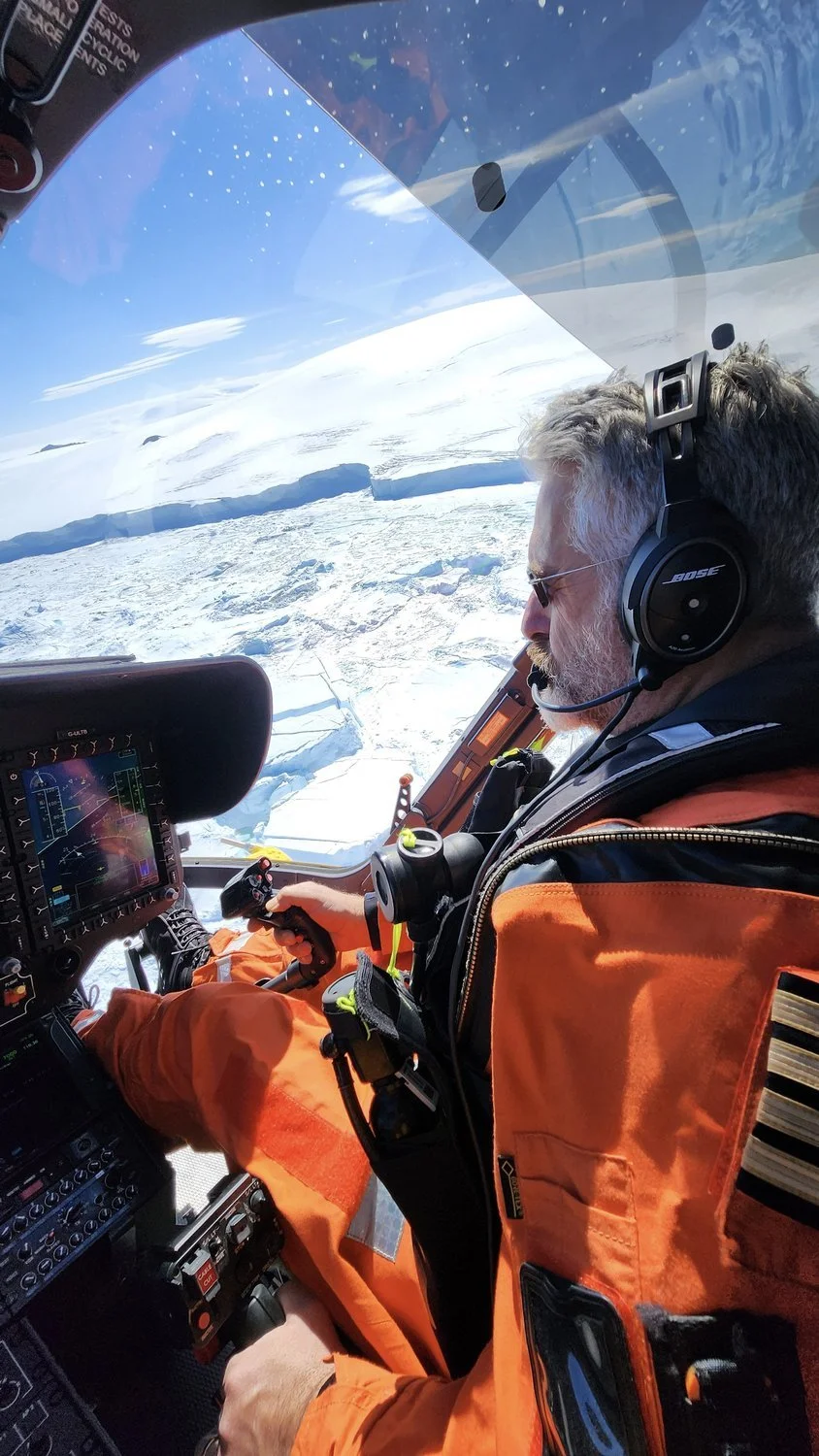
Helicopter flightseeing over the Antarctic sea ice, the kind of access only an expedition ship can offer. Photo courtesy of Dee Swaminathan, Deeper Meridien.
Expedition travel means reaching wild, remote or wildlife-rich places, usually by small ship or from a remote lodge, guided by naturalists and scientists instead of a fixed sightseeing script. The route bends around weather, ice and animals rather than a printed schedule, and the payoff is access that ordinary itineraries simply cannot reach.
I have always believed the best trips are the ones that feel deeply personal. Sometimes that means finding the right suite, the right city, and the breakfast room with the best natural light. Sometimes it means going a great deal farther than that, to places where the itinerary is written partly by the weather and where the most memorable ten minutes of the trip were never on any schedule.
That second kind of travel has a name, and it is having a moment. If you have been reading about small ships in Antarctica or naturalist-led sailings through the Galápagos and wondering what actually separates them from a regular cruise or tour, this guide is for you. I have brought in Dee Swaminathan, who has spent real time in these places, to help me plan this kind of journey properly, and between us we can tell you what the brochures tend to leave out.
What is expedition travel, really?
Expedition travel is about experiencing a place more deeply, usually through its wildlife, landscape and culture, and through access to spots that are genuinely hard to reach any other way. In practice it tends to mean one of a few things: traveling by small ship that can slip into places larger vessels cannot, staying in a remote wilderness lodge, trekking somewhere most people only see in photographs, or exploring alongside expert naturalists and local guides who know where to look and why.
The defining feature is not ruggedness. It is that the plan flexes. Ice, weather and animals do not read the printed itinerary, and a good expedition operator will tell you that on the first day rather than pretend otherwise. Some expeditions are active and demanding. Others pair a little daily adventure with beautiful rooms, very good food and polished service. The range is wide, which is exactly why the choice matters.
How is expedition travel different from a regular cruise or tour?
A traditional cruise sells you a schedule. You know which port you reach on Tuesday and what time you sail. An expedition sells you access, and the willingness to change plans to get it. Instead of a large ship and a fixed shore program, you get a small ship, a team of specialists, and a day that can be rearranged twice before breakfast because the captain found better ice, calmer water or a pod of whales.
There is a practical side to this that surprises people. On many expeditions, the size of the ship or group directly shapes how much time you actually spend exploring. In Antarctica, for instance, international guidelines cap the number of people who can be ashore at one site at any moment, so a smaller ship can mean more time on land per person and less time waiting your turn. Two itineraries that look almost identical on paper can feel very different once you understand how the days are built.
Who is expedition travel for?
Expedition travel suits curious people who want to do more than see a place from a coach window. It can be especially good for families with older children or teenagers, multigenerational groups traveling together, wildlife lovers, active couples, and experienced travelers who have started to feel that everywhere looks a little familiar and want somewhere that still feels new.
You do not need to be an extreme adventurer. The right expedition can be active, comfortable, educational, genuinely luxurious, or some very appealing combination of all four. What matters is matching the destination, pace and style to how you actually like to travel, rather than to how the most dramatic photo made you feel.
Why expedition travel needs specialized planning
Expedition journeys have more moving parts than a hotel stay. Timing, weather, wildlife patterns, accessibility, activity level, transportation and the quality of the guides all shape the experience, and most of it is difficult to improvise once you are somewhere beautifully remote with no second option down the road.
There is also more fine print than people expect. Departure windows are narrow and tied to seasons and wildlife cycles. Cabin categories and the best departures book far ahead, particularly around school holidays and peak wildlife seasons. The difference between a November and a February sailing in Antarctica, or a dry-season and green-season trip in Africa, can change the whole character of the journey. The right trip should feel exciting rather than overwhelming, and good planning is mostly the work of removing the overwhelm before you ever leave.
This is where having an expedition specialist matters. You do not need to know which ship, operator or month you want before reaching out. Tell us what you hope to see, how active you want to be and how much time you have. Dee and I can work backward from there and tell you which journeys are actually worth considering.
Where can expedition travel take you?
Antarctica is where a lot of people begin, and for good reason, but expedition travel takes many forms.
It might mean sailing the Galápagos with naturalists who can explain what you are looking at as it happens. It might mean the Arctic in summer, Patagonia's peaks and glaciers, remote corners of Africa reached by light aircraft, or a wilderness lodge surrounded by landscape that feels close to untouched. Some journeys are built around wildlife and conservation. Others center on culture, photography or active adventure, and many combine more than one, with beautiful hotels or private experiences stitched on before and after.
The broad menu is the point. The right starting question is usually not "where," but "what do I most want to see, feel and come home changed by."
Beginning with Antarctica
Antarctica is the first destination Dee and I are focusing on together, partly because it is extraordinary and partly because it is so easy to get wrong. The same continent can feel like a floating luxury hotel or a serious polar expedition depending entirely on the ship, the route, the activity level and the operator you choose. Some travelers want a polished, all-suite experience. Others want kayaking, hiking and more adventure. For some, the whole point is photography and learning beside working naturalists.
Choosing well is not about deciding which company is considered the most luxurious. It is about understanding how each day will actually unfold, when you want to be there, and which operator fits your priorities. Dee has written two guides that go well beyond the marketing. If you are weighing the main operators, start with Silversea vs. Quark vs. Lindblad: Choosing an Antarctica Expedition. If you are still deciding when to go, Best Time to Visit Antarctica: A Month-by-Month Guide sets out what each month actually delivers for penguins, whales, ice, and price.
The Sebastian Luxe Travel approach
Dee's expedition knowledge pairs with the personal, detail-obsessed way Sebastian Luxe Travel already plans trips. That means helping you choose the right destination and style of journey, then handling everything around it: the best hotels before and after, the right pacing, the family dynamics, the flights and transfers, and the small logistics that make a complicated trip feel easy.
It also means asking the questions that are not obvious at the start. How active do you want the days to be? How much do food, design and service matter to you? Would you rather be on a smaller ship? Are you comfortable crossing rough seas, or would a flight-based itinerary suit you better? Will the trip work for the ages and abilities of everyone traveling? The goal is not simply to send you somewhere remote. It is to build a journey that feels adventurous, seamless and entirely your own.
Frequently asked questions
What is expedition travel in simple terms? It is travel focused on reaching wild or remote places, usually by small ship or from a wilderness lodge, guided by naturalists and experts, where the route adapts to weather and wildlife rather than following a fixed schedule.
Is expedition travel the same as an expedition cruise? An expedition cruise is one common form of expedition travel, using a small ship built for remote waters. But expedition travel also includes land-based journeys such as wilderness lodges, safaris and treks that never involve a ship.
Do you have to be very fit or adventurous? No. Some expeditions are demanding, but many pair light daily activity with comfortable rooms and very good service. The right trip is matched to your energy and interests, not to the most extreme version available.
How far in advance should you plan an expedition trip? Often further than people expect. The best departures, cabins and lodges book well ahead, especially around school holidays and peak wildlife seasons, so several months to a year is common for popular destinations like Antarctica and the Galápagos.
When is the best time to go? It depends entirely on the destination and what you want to see, because seasons and wildlife cycles drive everything. This is one of the details worth sorting out early, since the same trip in two different months can feel like two different trips.
Planning an Expedition Journey
You do not need to arrive knowing which operator, ship or itinerary you want. In fact, I would rather you didn’t.
Tell us what you want to see, how much time you have, who is traveling and what you want the experience to feel like. Dee and I will help narrow the destination, season, route and operator, compare the departures that make sense and tell you plainly which ones we would rule out.
When you book an eligible expedition through Sebastian Luxe Travel, you generally pay the same cruise fare you would booking directly. Depending on the operator and sailing, we may also be able to add preferred-partner benefits such as onboard credit or upgrade opportunities.
We can then build the trip around the expedition, including the hotels, transfers, buffer nights and extensions before and after, so you are not trying to stitch together a complicated journey from six confirmation emails and a prayer.
No planning fee. Start with what you want to experience and we’ll take it from there.
Read More
Silversea vs. Quark vs. Lindblad: How to Choose the Right Antarctica Expedition →
If Antarctica is the goal, start here to understand how the ships, expedition styles and operators actually differ.
Best Time to Visit Antarctica: A Month-by-Month Guide →
Penguin chicks, whales, deeper ice and better value do not all happen at the same time. This is how I would choose your month.
Explora vs. Tierra vs. Awasi: Which Patagonia Lodge Is Best? →
For anyone thinking about combining Patagonia with Antarctica, this compares three of the best Torres del Paine lodges and explains how the two trips fit together.
A More Extraordinary Way to Travel: Introducing Expedition Journeys →
Meet Dee and see how we approach Antarctica, the Galápagos, the Arctic and other wonderfully complicated places.