Palace hotels, vineyard rituals, and the surprisingly complicated business of relaxation.
Updated October 13, 2026

The Vinothérapie Spa at Les Sources de Caudalie, where Bordeaux takes its wine and wellness equally seriously. Photo courtesy of Les Sources de Caudalie.
France does wellness the way it does most things: with discipline, beautiful products, and the quiet conviction that pleasure is not something one needs to apologize for. If Switzerland is a temple of steam where serenity is earned through silence and mild psychological exposure, France is a sanctuary of savoir-faire. It's less "meet your aura" and more "stop clenching your jaw while wearing a robe that makes you briefly consider becoming a different person."
The French approach to wellness isn't necessarily about becoming healthier, more productive, or the sort of person who drinks celery juice voluntarily. It's about feeling good, looking good, and understanding that a two-hour lunch is not incompatible with taking care of yourself. There are hammams, thermal baths, vineyard treatments, and entire palace hotels dedicated to the pursuit of a better complexion. You can have your face massaged with products that cost more than your shoes, then order Champagne without anyone suggesting you've undermined your progress.
It's a beautiful system, really. But before you book a Dior facial or disappear into a Parisian hammam, there's one question worth answering: are you actually supposed to be naked in a French sauna?
The answer is usually no. Unlike the textile-free sauna culture common in parts of Switzerland, French saunas generally expect you to cover yourself with a swimsuit or towel. There are exceptions, naturally, because apparently even relaxing requires a little research.
French Spa Etiquette in 90 Seconds: Nude or Not?
Before you arrive at a French spa wearing entirely the wrong amount of clothing, here's what to know.
Are French saunas nude? Usually not. Swimwear or a towel is generally expected, although individual facilities may have different policies.
Are French spas mixed-gender? Many luxury hotel pools, hammams, and sauna areas are shared by men and women. Check the specific facility.
Men, pack proper swim trunks. Some French pools and thalassotherapy centers prohibit loose board shorts. This is not the moment to discover your bathing suit is unacceptable.
Shower before entering the pools. The French may be less theatrical about hygiene than the Swiss, but cleanliness remains nonnegotiable.
Silence is appreciated. Not necessarily the absolute hush of a Swiss sauna, but quiet conversation is the general idea. This is a spa, not a podcast recording.
Check what's included. Booking a massage does not always mean unlimited access to the pool, hammam, and other facilities. An expensive assumption.
And please, leave your phone in the locker. Particularly the camera. Nobody needs to appear accidentally in someone else's vacation photographs.
The 7 Best Luxury Spa Hotels in France
Not every great hotel with a spa is a great spa hotel. Some properties have treatment rooms because someone decided the brochure needed a wellness section. Others have built an entire experience around the idea that feeling better should be one of the main reasons you travel.
These are the seven French spa hotels I'd consider first, depending on the kind of trip you're planning.
HotelLocationBest forCheval Blanc ParisParisDior treatments and contemporary palace luxuryRitz ParisParisClassic glamour and a spectacular indoor poolLes Sources de CaudalieBordeauxVinotherapy, wine country, and gastronomyRoyal Champagne Hotel & SpaChampagneRomantic countryside weekends near ParisGrand-Hôtel du Cap-FerratFrench RivieraMediterranean views and classic grand-hotel luxuryAirelles CourchevelFrench AlpsSki recovery and luxurious family ski holidaysLily of the ValleySaint-Tropez peninsulaFitness, wellness programs, and Mediterranean living
How I Choose Spa Hotels
As a luxury travel advisor, I look at more than the treatment menu when evaluating a spa hotel. The facilities need to be substantial, but the hotel itself should also justify the stay. Location, rooms, dining, service, and the overall experience matter just as much as whether someone offers an excellent facial.
I also consider who will actually enjoy the hotel. A couple wanting a romantic countryside escape has different priorities from someone booking a structured wellness program or a family planning a ski holiday. My recommendations draw on my professional hotel-booking experience and property research, with firsthand observations where I have them.
The real question isn't simply which spa is best. It's which one makes sense for your particular trip, and whether it's worth traveling there in the first place.
Where to Spa in France: Seven Hotels Worth Planning Around
Cheval Blanc Paris: Dior Spa and the Art of Looking Effortless

A treatment suite at Dior Spa Cheval Blanc Paris, where even the skincare comes with impeccable design. Photo courtesy of Cheval Blanc.
There are spas that offer a nice facial, and then there is the Dior Spa at Cheval Blanc Paris, where an entire floor seems devoted to the idea that ordinary life is simply too demanding on one's complexion. The spa includes six treatment suites, a 30-meter pool, sauna, and hammam, all within one of the most beautifully designed hotels in Paris. Everything is so carefully considered that even the silence feels expensive.
The Dior treatments are the main attraction, although the pool alone makes a compelling argument for scheduling a proper spa morning. This is somewhere I'd recommend choosing a treatment you genuinely want rather than booking whatever appointment happens to be available. A great facial is wonderful; rearranging your entire Paris itinerary for an average massage is less convincing.

The 30-meter pool at Cheval Blanc Paris, a compelling argument for leaving the afternoon entirely unscheduled. Photo courtesy of Cheval Blanc.
One advantage of staying at Cheval Blanc is that access to the spa facilities and pool is among the hotel's guest amenities. That's worth distinguishing from booking an individual treatment, where access arrangements should be confirmed separately.
The hotel's location is another advantage. Sitting beside the Seine in the restored La Samaritaine building, Cheval Blanc puts the Louvre, Saint-Germain-des-Prés, and much of central Paris within easy reach. You can spend the morning at the spa, have an excellent lunch, and return to exploring the city without sacrificing half the afternoon to transportation.
I would consider Cheval Blanc for couples, anniversaries, and travelers who appreciate contemporary design and exceptionally polished service. Its spa is a genuine reason to choose the hotel, particularly if you're deciding between Paris's more traditional palace properties.
For the room categories, Seine views, dining, and whether the hotel is worth its considerable price tag, see my Cheval Blanc Paris hotel guide.
Ritz Paris: Old-School Glamour and the World's Most Civilized Swim

The legendary pool at Ritz Club & Spa in Paris, complete with underwater music. Photo courtesy of Ritz Paris.
The Ritz doesn't need to reinvent wellness. It has spent more than a century perfecting the art of making people feel that ordinary life is happening somewhere considerably less interesting. The Ritz Club & Spa has a beautiful indoor pool, sauna, hammam, and an almost theatrical sense of calm. There is even underwater music in the swimming pool, which sounds completely unnecessary until you consider that you've paid to escape ordinary sound altogether.
The treatment menu includes La Prairie facials, including the brand's Skin Caviar rituals, alongside massages and other wellness experiences. This is not a place that needs an elaborate philosophy about personal transformation to justify itself. Sometimes a beautiful pool, an excellent facial, and several uninterrupted hours are more than sufficient.
One practical detail I'd pay attention to is spa access. The Ritz welcomes day visitors by reservation, but booking a treatment doesn't automatically mean unlimited complimentary use of every facility. Access may be included with qualifying treatments or available for an additional charge, so I would confirm the current arrangements before reserving.
The Ritz also has designated pool hours for younger guests, while the broader spa facilities have age restrictions. This matters if you're staying as a family and imagining that everyone will spend the entire afternoon together in the spa.
I'd choose the Ritz for someone who loves the ceremony of a grand Paris hotel, the atmosphere of Place Vendôme, and the pleasure of swimming beneath a painted sky. Cheval Blanc is the more contemporary choice; the Ritz feels like stepping into a version of Paris where the twentieth century ended at precisely the right moment.
Both have their merits. Neither requires a personality-changing detox.
Les Sources de Caudalie, Bordeaux: Wine Country, Minus the Guilt
Only the French could create a luxury wellness retreat centered around grapes and make the entire thing seem medically adjacent. Located among the vineyards of Château Smith Haut Lafitte outside Bordeaux, Les Sources de Caudalie combines countryside luxury, serious gastronomy, and its signature Vinothérapie Spa. The setting does a remarkable amount of work before anyone has even handed you a robe.
Treatments use grape- and vine-derived ingredients in facials, body rituals, and scrubs, including the wonderfully named Crushed Cabernet treatment. The spa also offers bathing rituals and thermal facilities, making it more substantial than a hotel that simply happens to have a few treatment rooms. No, you aren't literally bathing in Cabernet Sauvignon, although a little creative interpretation seems perfectly reasonable when you're in Bordeaux.
One practical detail matters here: spa access is connected to treatment reservations and the property's conditions. I would arrange treatments well before arrival, especially if this is the primary reason for choosing the hotel, and confirm exactly which facilities are included.
This is an excellent choice for couples who want a countryside stay with enough happening beyond the spa to justify several nights. Wine tastings, cycling, vineyard visits, and excellent food are all part of the appeal. The experience is more relaxed and rustic than a Paris palace hotel, with an emphasis on the vineyard setting rather than polished urban glamour.
I'd generally recommend at least two nights, preferably three if wine tastings and spa time are both priorities. Les Sources de Caudalie makes sense as part of a Bordeaux itinerary, not as a rushed overnight excursion from Paris. The pleasure comes from slowing down and enjoying the surroundings, something rather easily forgotten when an itinerary has twelve hotels and only ten nights.
And the fact that a glass of wine isn't treated as a moral failure feels entirely appropriate.
Royal Champagne Hotel & Spa: A Very Good Reason to Leave Paris
Royal Champagne sits above the vineyards of the Champagne region, with sweeping views across the Marne Valley and the sort of setting that makes people start asking whether they could realistically move to France. The answer is usually no, but it's a pleasant thought to entertain from an infinity pool. The hotel feels wonderfully removed from the pace of Paris without requiring a particularly complicated journey to get there.
The spa is substantial, with indoor and outdoor pools, a hammam, sauna, whirlpool, nine treatment rooms, and fitness and wellness programming. It has enough substance to justify spending an afternoon doing absolutely nothing, but the real pleasure is the combination of modern wellness and the Champagne countryside.
A morning massage, some time in the pool, lunch overlooking the vineyards, and a tasting later in the afternoon makes for a remarkably convincing itinerary. I'd allow at least two nights so you can enjoy the setting properly rather than arriving just in time for dinner and leaving immediately after breakfast.
Royal Champagne is particularly appealing for couples, anniversaries, and girls' weekends. It's also an excellent option for travelers who want to combine Paris with a countryside hotel stay without making a long journey south.
For families, the hotel welcomes younger children into the spa facilities during designated hours when accompanied by a parent. That's worth knowing before planning an afternoon around the pool, particularly when traveling with children whose tolerance for sitting quietly in a robe is somewhat limited.
The comparison with Les Sources de Caudalie comes down to geography and the kind of holiday you're planning. Royal Champagne fits naturally with Paris, while Caudalie makes considerably more sense for a Bordeaux wine-country itinerary. Both offer the persuasive combination of relaxation and gastronomy.
And if the Champagne tasting takes place after the massage rather than before, everyone involved will probably have a more productive afternoon.
Grand-Hôtel du Cap-Ferrat, A Four Seasons Hotel: Riviera Wellness With Better Lighting

The private pool at Villa Rose Pierre, part of Grand-Hôtel du Cap-Ferrat, A Four Seasons Hotel. Photo courtesy of Four Seasons.
There is something deeply persuasive about the South of France as a wellness destination, although it isn't necessarily because anyone is getting to bed early. At Grand-Hôtel du Cap-Ferrat, A Four Seasons Hotel, the spa combines beautiful treatment facilities with Mediterranean gardens, sea air, and the kind of setting that makes an afternoon appointment feel like a small personal triumph. Even the light seems to understand that everyone would prefer to look slightly better than they did yesterday.
The spa includes an indoor lap pool with a countercurrent system and treatments using skincare brands such as Biologique Recherche and Dr Burgener. Outdoor treatment cabanas offer another lovely way to enjoy a massage, particularly when the weather is cooperating. It's a genuine spa experience rather than a hotel relying entirely on a famous name and an attractive massage menu.
One practical distinction for families is that the main indoor spa facilities are reserved for guests aged 16 and older. I'd confirm the arrangements for any younger travelers before booking, particularly if the family plans to spend time at the spa together.
Of course, the hotel also has Club Dauphin, its celebrated seawater infinity pool overlooking the Mediterranean. That's separate from the spa, but it's one of the main reasons I'd consider the property for a longer Riviera stay.
The spa, gardens, restaurants, and pool all contribute to an experience that feels complete without requiring guests to leave the hotel every afternoon. I'd recommend Grand-Hôtel du Cap-Ferrat for couples, milestone celebrations, and travelers who want classic Riviera luxury with wellness as a genuinely worthwhile part of the holiday.
If sandy beach access matters more than extensive spa facilities, however, I'd also consider Royal-Riviera in Saint-Jean-Cap-Ferrat. It's a different hotel experience, and understanding that distinction before booking is considerably more useful than discovering it when someone asks where the beach is.
Airelles Courchevel: When Ski Recovery Becomes an Art Form

The indoor spa pool at Airelles Courchevel, a particularly civilized way to recover from a day on the slopes. Photo courtesy of Airelles.
Skiing is an excellent way to spend a day outdoors, provided you overlook the fact that it requires waking up early, putting on an alarming amount of equipment, and repeatedly asking your knees to do things they never agreed to. Airelles Courchevel understands this better than most hotels.
Its spa includes an indoor pool, sauna, hammam, snow cave, sensory showers, and cryotherapy, with treatments from La Mer and LBA. It's a rather elaborate recovery setup, particularly after several days on the slopes when the simple act of walking downstairs has become unexpectedly challenging.

An in-suite spa at Airelles Courchevel, for anyone who feels that having a hotel spa downstairs isn't quite enough. Photo courtesy of Airelles.
Airelles embraces the full winter-palace fantasy, with richly decorated interiors, fireplaces, exceptional ski service, and extensive family facilities. For multigenerational ski trips, that combination is genuinely valuable. A great spa becomes considerably more useful when some members of the family want another full day skiing and others are ready to spend the afternoon doing something that doesn't require boots.
The important booking decision is often the room configuration, not the spa menu. Larger families should understand the available suites, connecting options, and children's facilities before committing to a particularly expensive ski week. The exact accommodation setup can make the difference between a wonderfully easy holiday and a week of complicated logistics.
I'd compare Airelles with Cheval Blanc Courchevel, which offers a more intimate, contemporary atmosphere and a Guerlain spa. Aman Le Mélézin is another choice for travelers prioritizing understated design and wellness, while L'Apogée Courchevel deserves attention when larger family accommodations are important.
All four are excellent ski hotels, but they create very different holidays. I wouldn't select one solely because a treatment menu happened to be longer.
And yes, there's something mildly ridiculous about booking a cryotherapy session after spending the morning complaining about the cold. But that's luxury. The temperature is unpleasant only when it wasn't your idea.
Lily of the Valley, Saint-Tropez Peninsula: Wellness for People Who Still Want Rosé

Villa W at Lily of the Valley, with its own private lap pool and sauna. Photo courtesy of Lily of the Valley.
Lily of the Valley is what happens when serious wellness meets a Philippe Starck-designed hotel overlooking the Mediterranean, and neither side is willing to compromise. Near Gigaro Beach on the Saint-Tropez peninsula, the hotel focuses on fitness, nutrition, recovery, and structured wellness programs rather than simply offering the occasional massage.
Its Shape Club includes extensive fitness facilities, a heated outdoor pool, a Pilates Reformer studio, cryotherapy, and a Nordic circuit with saunas, hammam, and cold-water experiences. Wellness is central to the property, with programs dedicated to different health and fitness goals.
One particularly useful distinction is that the hotel offers both individual spa and fitness experiences and more structured multi-day wellness programs. I'd compare what's included in those programs carefully, particularly since accommodation and program pricing can be separate.
Lily of the Valley is a more focused wellness experience than Grand-Hôtel du Cap-Ferrat. Grand-Hôtel is classic Riviera luxury, with the spa as one excellent part of the holiday. Lily of the Valley makes considerably more sense when movement, nutrition, treatments, and recovery are important reasons for choosing the hotel.
I'd consider it for couples, wellness-focused getaways, and travelers who genuinely enjoy fitness programming. If the idea of waking up for Pilates sounds better than waking up for a beach-club reservation, this may be your place.
For travelers who would prefer a more traditional Saint-Tropez resort with extensive facilities and a larger hotel experience, I'd also compare Airelles Château de la Messardière.
And because it's still France, there's no need to pretend the pleasures of the table have disappeared altogether. The hotel can take wellness seriously without requiring guests to become entirely different people.
Three More French Spas Worth Knowing
Not every excellent spa hotel needs to be the centerpiece of a wellness trip. These three properties are worth considering when the overall hotel experience is just as important as the treatments.
Cheval Blanc Courchevel: Guerlain Spa in the French Alps
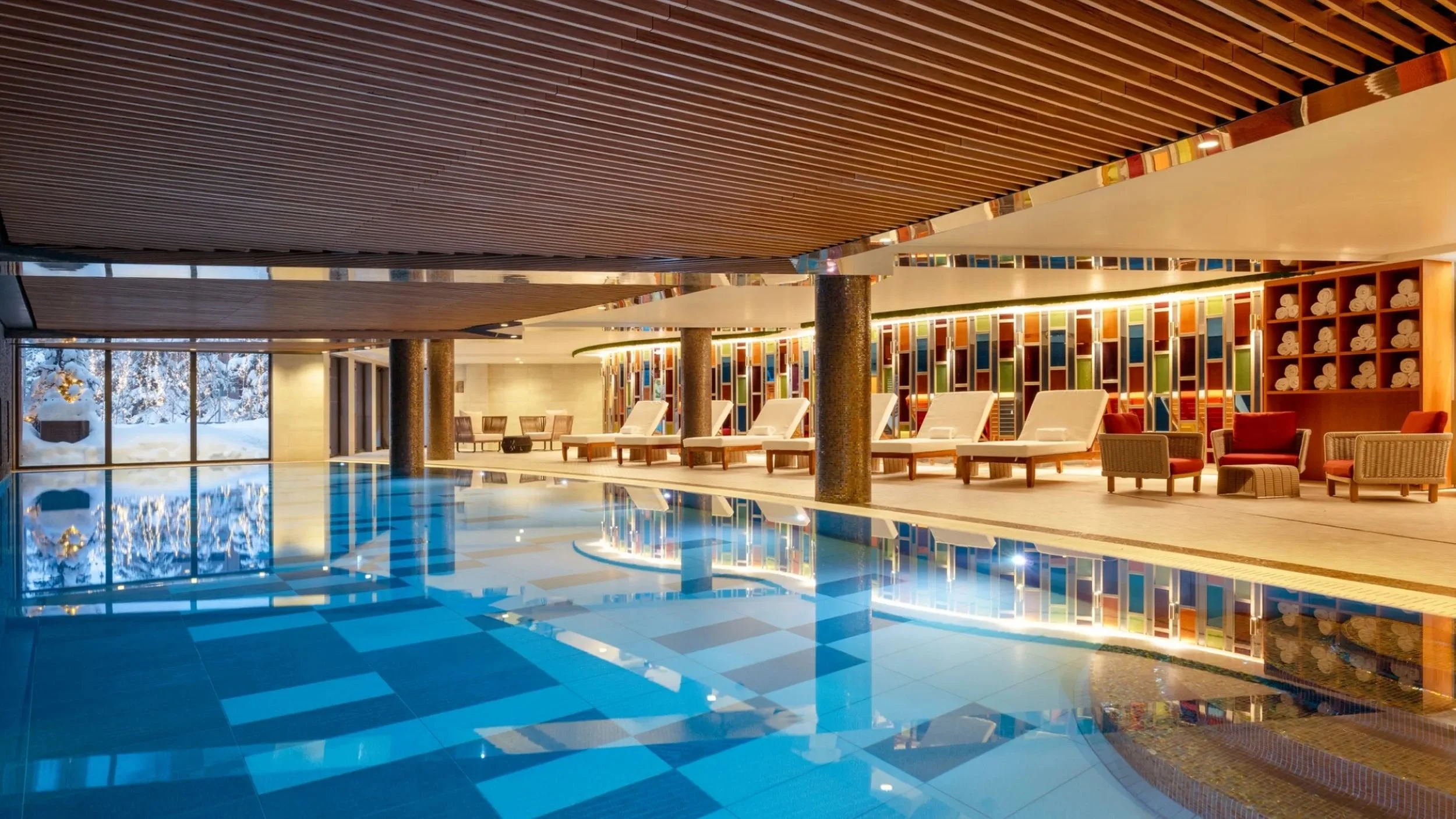
The Guerlain Spa pool at Cheval Blanc Courchevel, where ski recovery is taken every bit as seriously as the skiing. Photo courtesy of Cheval Blanc.
Cheval Blanc Courchevel offers an intimate alpine atmosphere, exceptional skiing, and a Guerlain Spa with treatments designed to complement time in the mountains. The spa includes a pool, hammam, sauna, whirlpool, and Russian banya, creating a wonderful place to recover after skiing.
For couples who want a quieter, more contemporary hotel than Airelles, it makes a compelling alternative. The distinction is atmosphere: Airelles embraces the full winter-palace fantasy, while Cheval Blanc is smaller and more understated. Both are serious contenders for a luxury ski holiday, but choosing between them should involve the skiing, service, rooms, and overall experience rather than simply the massage menu.
Château Saint-Martin & Spa, Vence
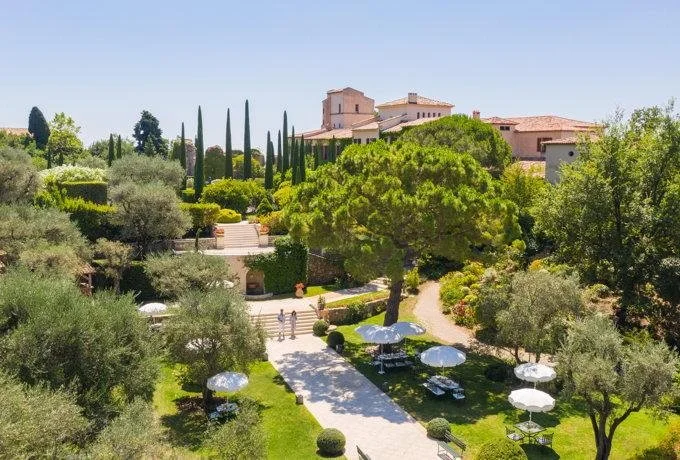
The gardens and historic stone buildings at Château Saint-Martin & Spa, overlooking the hills above Vence. Photo courtesy of Oetker Hotels.
Château Saint-Martin & Spa is a beautiful hillside retreat above the French Riviera, surrounded by gardens and olive groves. It's particularly appealing for couples who want a quieter South of France stay, with a spa, lovely surroundings, and enough distance from the coast to feel like they've genuinely escaped the summer crowds.
It's the sort of place where a wonderful afternoon can consist of a massage, a walk through the gardens, and absolutely no desire to find out what everyone else is doing in Saint-Tropez.
Hôtel du Cap-Eden-Roc, Antibes

The famous seawater pool at Hôtel du Cap-Eden-Roc, perched above the Mediterranean at Cap d'Antibes. Photo courtesy of Hôtel du Cap-Eden-Roc.
Hôtel du Cap-Eden-Roc is one of the Riviera's great hotel institutions, with Dior spa treatments and the extraordinary setting of Cap d'Antibes. I'd choose it for the full historic Riviera experience, including the sea, gardens, restaurants, and famous pool.
The spa is a beautiful addition to the stay, but the hotel itself is the attraction. That distinction matters when comparing it with a property like Lily of the Valley, where wellness is much more central to the experience.
French Spa Culture: Hammams, Rituals, and a Few Very French Rules
French spa culture is less about enduring discomfort in pursuit of self-improvement and more about the elegant pursuit of pleasure. There is a rather appealing understanding that relaxation and indulgence need not be mutually exclusive, even when the treatment menu features words such as detoxification, drainage, and cellular renewal.
The French have a wonderful relationship with the idea of feeling better. They don't necessarily believe that every indulgence requires a corresponding act of self-denial. You can have a pastry after Pilates, a glass of wine after a massage, and cheese after practically anything. Nobody seems particularly distressed by the contradiction.
French wellness also draws from several different traditions. There are historic thermal-bathing towns, coastal thalassotherapy centers, sophisticated urban hotel spas, and hammams influenced by North African bathing rituals. Add the country's celebrated skincare industry, and the whole experience becomes a combination of bathing, treatment, ritual, and an almost unreasonable commitment to beautiful packaging.
Hammams, Thalassotherapy, and Vinotherapy: What's the Difference?
French spa menus can be surprisingly elaborate, and the terminology doesn't always help. A hammam is a steam-bathing experience, sometimes followed by exfoliation with a traditional black-soap scrub. Some hotels offer a simple steam room, while dedicated hammams provide a more involved bathing ritual.
Thalassothérapie uses seawater and marine-inspired treatments, with a long history in France's coastal wellness destinations, particularly along the Atlantic coast. Depending on the center, a program might include heated seawater pools, hydrotherapy, body treatments, and supervised wellness activities. It's generally more structured than visiting a hotel spa for an afternoon.
Then there's vinothérapie, which uses grape- and vine-derived ingredients in skincare treatments. Les Sources de Caudalie is one of the best-known examples. Only France could turn wine country into an entire wellness philosophy and somehow make the whole thing sound delightfully scientific.
It's difficult to argue with the logic.
What Should You Wear to a French Sauna or Hammam?
In France, you generally shouldn't assume nudity is expected in a sauna. The country's official tourism guidance notes that naturist saunas are the exception, with a swimsuit or towel generally expected.
That doesn't mean every French facility follows an identical dress code. Luxury hotel spas, public thermal baths, traditional hammams, and naturist establishments can all have different requirements. Mixed-gender hotel pools generally require swimwear, while some gender-separated bathing rituals may operate differently.
For an individual treatment, appropriate draping or disposable underwear may be provided. Being given disposable underwear for a massage does not, however, mean the communal pool suddenly has an optional dress code.
Nobody wants to discover this through an awkward conversation with a receptionist wearing impeccable linen.
The French Spa Robe Has Its Own Social Hierarchy
The robe is practically an accessory category. It should be plush, beautifully cut, and sufficiently comfortable to make the rest of your wardrobe seem like a series of unfortunate decisions. You wear it between treatments, remove it when appropriate, and briefly wonder whether you could justify purchasing one for home.
It's a surprisingly effective way to convince yourself that doing absolutely nothing is a productive use of the afternoon. The ideal sequence involves arriving a little early, enjoying the facilities, and leaving yourself enough time after the treatment to appreciate the experience rather than rushing directly to your next reservation.
Preferably over lunch.
Do You Tip at French Spas?
Tipping is generally optional in French hotel spas, where service is included in the price. A modest gratuity for a particularly excellent treatment is appreciated but not required, and individual establishments may have their own practices.
And yes, the treatment may already cost several hundred euros. That is a separate emotional journey.
How to Plan a Luxury Spa Trip to France
One of the best things about spa travel in France is that it rarely needs to become the entire purpose of the holiday. A good spa is like a great sauce. It doesn't need to be the whole meal; it just makes everything better.
Paris and Champagne: A City Break With a Countryside Finish

Royal Champagne Hotel & Spa, a countryside retreat overlooking the Champagne vineyards. Photo courtesy of Royal Champagne.
For travelers spending several nights in Paris, I'd build in a spa morning at Cheval Blanc or the Ritz rather than forcing treatments into an already packed sightseeing schedule. Shopping in Paris is essentially a cardio sport, particularly when the itinerary involves Saint-Germain-des-Prés, the Marais, and someone announcing that they just want to make one quick stop on Avenue Montaigne.
Royal Champagne makes a wonderful two-night extension when the goal is to spend a little time in the countryside. The contrast between Paris's restaurants and museums and a few slower days among the vineyards can be more satisfying than adding another major city simply because the train connections are convenient.
Bordeaux: A Vineyard Spa Weekend

The vineyard setting at Les Sources de Caudalie near Bordeaux, where excellent wine and a spa afternoon are entirely compatible. Photo courtesy of Les Sources de Caudalie.
Les Sources de Caudalie makes sense as the centerpiece of a Bordeaux wine-country itinerary. I'd allow at least two nights, preferably longer if the plan includes wine tastings, cycling, leisurely meals, and several spa treatments.
This is not a hotel I'd book for a rushed overnight stop. The pleasure is having enough time to enjoy the property, which seems obvious until you look at how many itineraries attempt to fit half of France into one week.
French Riviera: Classic Luxury or Dedicated Wellness?
The Riviera is beautiful, glamorous, and occasionally exhausting. Between boat days, beach clubs, lunches that begin at one and end whenever they please, and the general business of looking appropriately dressed for all of it, a spa afternoon can become surprisingly valuable.
Grand-Hôtel du Cap-Ferrat is where I'd start for the classic Riviera experience, while Lily of the Valley is better suited to a trip centered on fitness and wellness. For something completely different, Airelles Gordes, La Bastide offers a beautiful Provençal setting and a Guerlain spa.
For more ideas on how to combine the region's hotels and destinations, see my South of France travel guide. The Riviera offers enough different experiences that choosing the right base matters, particularly if you're balancing spa time with restaurants, beaches, and exploring.
Nobody needs to spend half a wellness holiday sitting in Riviera traffic.
Courchevel: A Spa Holiday With Some Skiing Attached
After several days of skiing, the body starts filing formal complaints. This is an excellent time for a proper massage, ideally before the end of the trip when everyone has stopped pretending their legs feel fine.
I'd compare Airelles, Cheval Blanc, Aman Le Mélézin, and L'Apogée based on the overall ski holiday, especially room configurations, family requirements, ski logistics, and the experience for anyone who doesn't want to ski every day.
A hotel with an excellent spa is wonderful. A hotel where the non-skiers can have an equally good holiday is much more valuable.
French Spa FAQs
Are French saunas nude or swimsuit-only?
Most French saunas are not automatically nude. A swimsuit or towel is generally expected, but individual facilities may permit or require different levels of coverage. Always check the dress code, especially at traditional hammams or naturist establishments.
Are French saunas and hammams mixed-gender?
Many luxury hotel spas have shared facilities, but it depends on the property. Some offer separate areas, gender-specific bathing sessions, or individual treatment experiences. Check in advance if you're particularly concerned about the arrangements.
Can men wear board shorts in French spas?
Sometimes, but not everywhere. Certain French public swimming pools and thalassotherapy facilities require fitted swim trunks rather than loose board shorts. Hotel policies differ, so checking before packing is a good idea.
Can You Visit a French Luxury Hotel Spa Without Staying at the Hotel?
Sometimes. The Ritz Paris offers spa day access under specific booking conditions, while other properties may welcome outside visitors for treatments but restrict access to certain facilities.
Always check whether your reservation includes the swimming pool, hammam, sauna, and relaxation areas. A spa treatment and a full day at the spa are not necessarily the same product, even when the price suggests otherwise.
Which Luxury Spa Hotels in France Are Best for Couples?
Cheval Blanc Paris and the Ritz are appealing for glamorous city stays, while Royal Champagne and Les Sources de Caudalie are excellent options for a romantic countryside escape. Grand-Hôtel du Cap-Ferrat makes sense for couples who want the classic French Riviera experience, with the spa as one wonderful part of the holiday.
Which French Spa Hotel Is Best for a Dedicated Wellness Retreat?
Lily of the Valley is particularly well suited to travelers interested in structured fitness and wellness programming. Les Sources de Caudalie offers a more leisurely vineyard experience centered on treatments, while Royal Champagne combines extensive spa facilities with a peaceful countryside setting.
The best choice depends on whether you're looking for an actual wellness program or simply a few days of feeling considerably better than you did when you arrived.
How Many Nights Do You Need for a French Spa Getaway?
For countryside stays such as Royal Champagne or Les Sources de Caudalie, I generally recommend two to three nights. That allows enough time for treatments, dining, and exploring without making the entire stay a race against checkout.
For a structured wellness program at Lily of the Valley, the stay should be built around the program's duration. In Paris, a single well-planned spa morning may be enough, particularly when sightseeing and restaurants are the main priorities.
The French Art of Doing Absolutely Nothing
Swiss wellness is about precision. French wellness is about pleasure, although admittedly a very particular and often expensive version of it. A Swiss spa may ask you to sit naked in silence, contemplate the benefits of cold water, and reconsider your relationship with sugar. A French spa is more likely to give you a beautiful robe, an excellent facial, and the quiet understanding that you probably have dinner reservations later.
Neither approach is necessarily better. They reflect two wonderfully different ideas of what it means to take care of yourself. In France, wellness can involve a structured fitness program, a thermal-bathing tradition, an elaborate skincare ritual, or simply a long afternoon spent somewhere so lovely that checking your phone feels slightly vulgar.
And perhaps that's the real appeal. You don't have to reinvent yourself or become the sort of person who describes cucumber water as transformative. You can take a little time to feel better, eat something delicious, and return to ordinary life looking slightly more rested than circumstances would suggest.
Preferably with very good skin. And absolutely no intention of giving up dessert.
Planning a Spa Trip to France?
Choosing the right French spa hotel is about more than deciding which one has the prettiest pool. The location, room category, treatment access, season, and overall atmosphere can completely change the experience.
I'm Kate Van Dell, founder of Sebastian Luxe Travel. I help clients compare luxury hotels, identify room categories worth paying for, and work out how to incorporate spa time into a Paris stay, Champagne weekend, Riviera holiday, or French Alps ski trip.
Through my preferred hotel partnerships, eligible bookings may include breakfast, hotel credits, room upgrades when available, and other benefits. I don't charge a planning fee for hotel-only stays.
Because the right spa experience should leave you feeling better, not wondering why you spent so much money to sit in a steam room with strangers.
Read Next
Swiss Sauna Etiquette: Nude or Not?
Do you actually have to get naked in a Swiss sauna? A funny, practical guide to swimsuit rules, mixed-gender saunas, awkward encounters, and the very Swiss expectation that everyone remain completely silent.
Cheval Blanc Paris: Hotel Guide
Considering the Dior Spa? Here's what to know about the hotel itself, including rooms, dining, and whether Cheval Blanc is the right Paris palace for your trip.
The South of France Travel Guide
From Provence to Saint-Tropez, where to stay, how to combine destinations, and how to spend less time in Riviera traffic.
Airelles Courchevel: Hotel Guide
A closer look at one of Courchevel's most elaborate hotels, including skiing, family facilities, rooms, and what makes it different from Cheval Blanc and Aman Le Mélézin.