

Updated September 2026
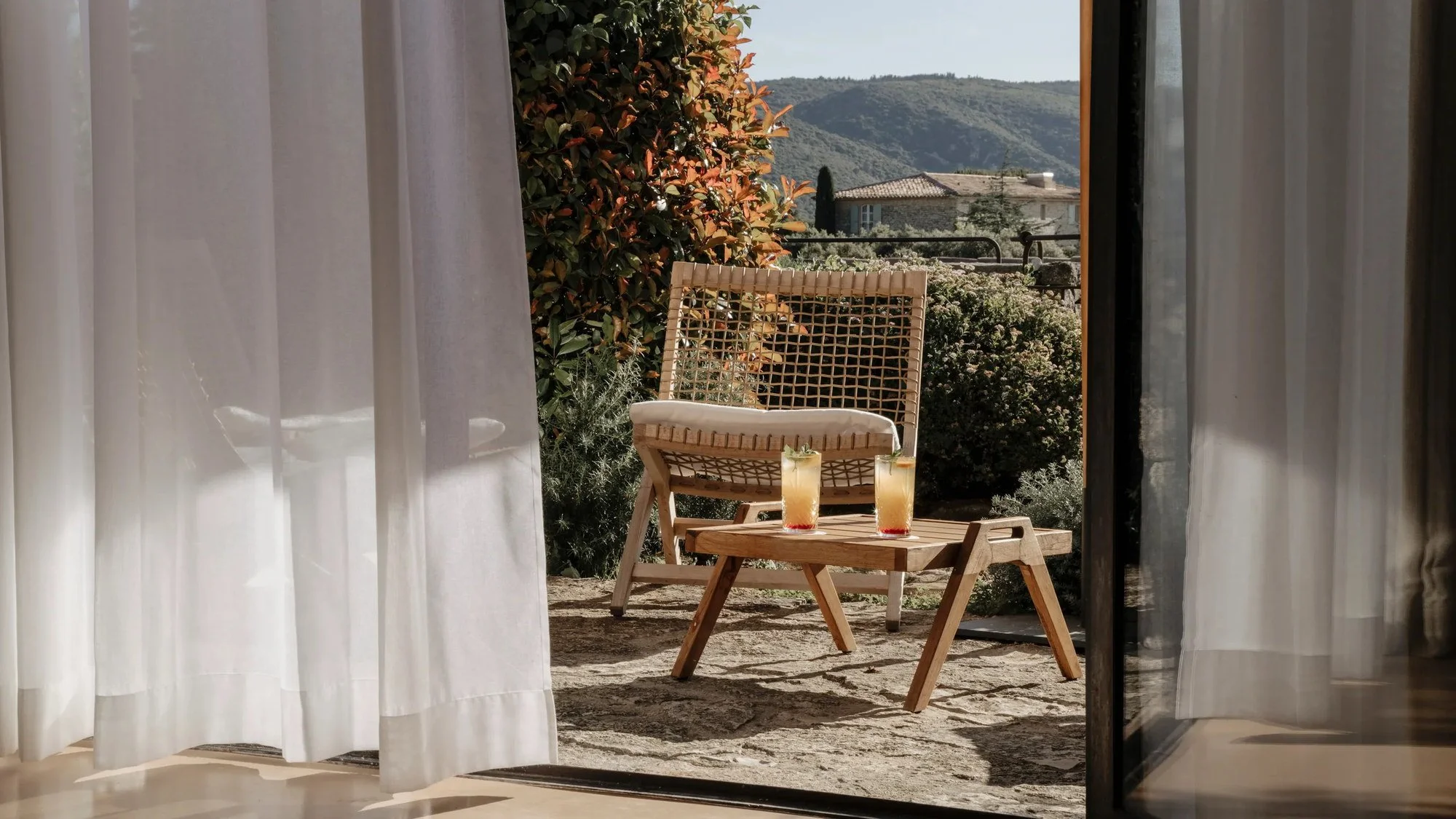
Slower mornings on a private terrace overlooking the quiet countryside of Provence.
Provence has a way of making every possible choice look correct. Gordes, Saint-Rémy, Bonnieux, Aix, the stone farmhouse with the olive trees and the pool. Eventually you have fourteen tabs open and the unsettling realization that none of them has explained which one actually makes sense for your trip.
I lived in Aix-en-Provence for a year and have planned many trips throughout Provence since, which means I know the region both romantically and practically. Living there made me fall in love with it. Planning it for other people made me much less sentimental about unnecessary driving.
So I am less interested in telling you which village is the prettiest. The more useful question is where you should stay based on how you want your days to work, how often you want to get in the car, and whether you would be happier with a concierge downstairs or a kitchen, a private pool and no particular reason to put on shoes before lunch.
Provence is larger and slower than it looks. A seemingly small decision about where you sleep can turn into hours of driving over the course of a week, and this is not a destination that rewards spending every afternoon in a car. I plan it in this order: first the area, then the hotel or villa, then the exact room or house.
If you are still deciding between Provence, the French Riviera and Saint-Tropez, start with my South of France guide. This guide is for the people who already know they want villages, markets, vineyards and long lunches, and now need to figure out exactly where to put themselves.
Where should you stay in Provence?
Where to start, by area
| Area | Best for | Where I’d start |
|---|---|---|
| Luberon | First Provence trip, hill villages, markets | Airelles Gordes, Capelongue, Coquillade |
| Alpilles | Food, art, cycling, longer stays | Domaine de Manville or Baumanière |
| Aix and its countryside | Art, architecture, wine, town life | Villa La Coste |
| Northern Vaucluse | Cycling, Mont Ventoux, wine, quiet | Hôtel Crillon le Brave |
| A private villa | Families, several generations, week-long stays | Luberon or Alpilles |
The short version is that most first-time travelers should begin with the Luberon or the Alpilles. Aix and northern Vaucluse are excellent answers for more specific trips.
If you have never been, I would usually start in the Luberon and not overthink it. If you have already done Gordes and thought it was beautiful but slightly busy, the rest of this page is especially for you.
Most people arrive here torn between two villages and one hotel, when the question that actually decides the trip is how much they want to drive and whether they want someone else making breakfast.
Still deciding
Most people arrive at this page torn between two villages and one hotel, when the question that actually decides the trip is how much you want to drive and whether you want someone else making breakfast. Tell me who is traveling and how long you have, and I will tell you which base fits.
The Luberon: the first-trip answer
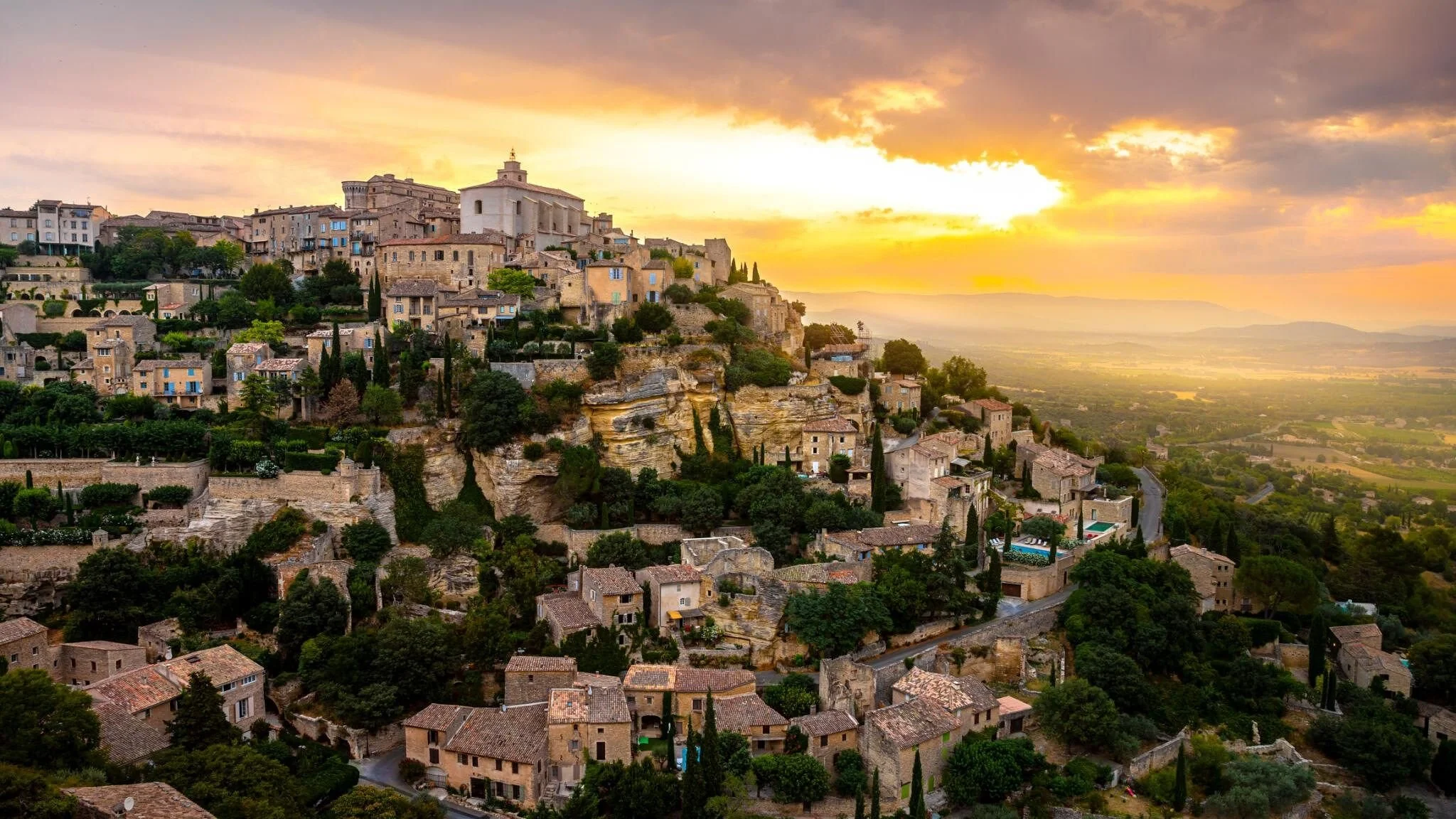
The iconic hilltop village of Gordes lit by late afternoon golden light in the Luberon.
This is the Provence most people picture before they arrive. Pale stone villages sit on hillsides above markets, vineyards and a landscape that has been photographed so thoroughly that arriving can feel more like recognition than discovery. That is not a criticism. It really is as good as advertised.
Gordes is the most dramatic of the villages and also the busiest. Bonnieux and Ménerbes are quieter. Lourmarin has more year-round life and puts Aix within easier reach, while L’Isle-sur-la-Sorgue is worth building a Sunday around if you care about antiques. Roussillon is somewhere I absolutely want you to visit but generally think of as a morning rather than a base.
The trick is not seeing every village. It is choosing a base good enough that you stop caring whether you saw every village.
Gordes: for the full Provence fantasy
Gordes is famous for a reason. The village climbs dramatically up the hillside above the Luberon, and staying here means you get it back in the morning and evening after many of the day visitors have moved on. For a first trip, I think that is genuinely special.
It is also the most polished version of the Luberon, which makes it particularly good for travelers who want Provence without giving up serious hotel service.
Airelles Gordes, La Bastide
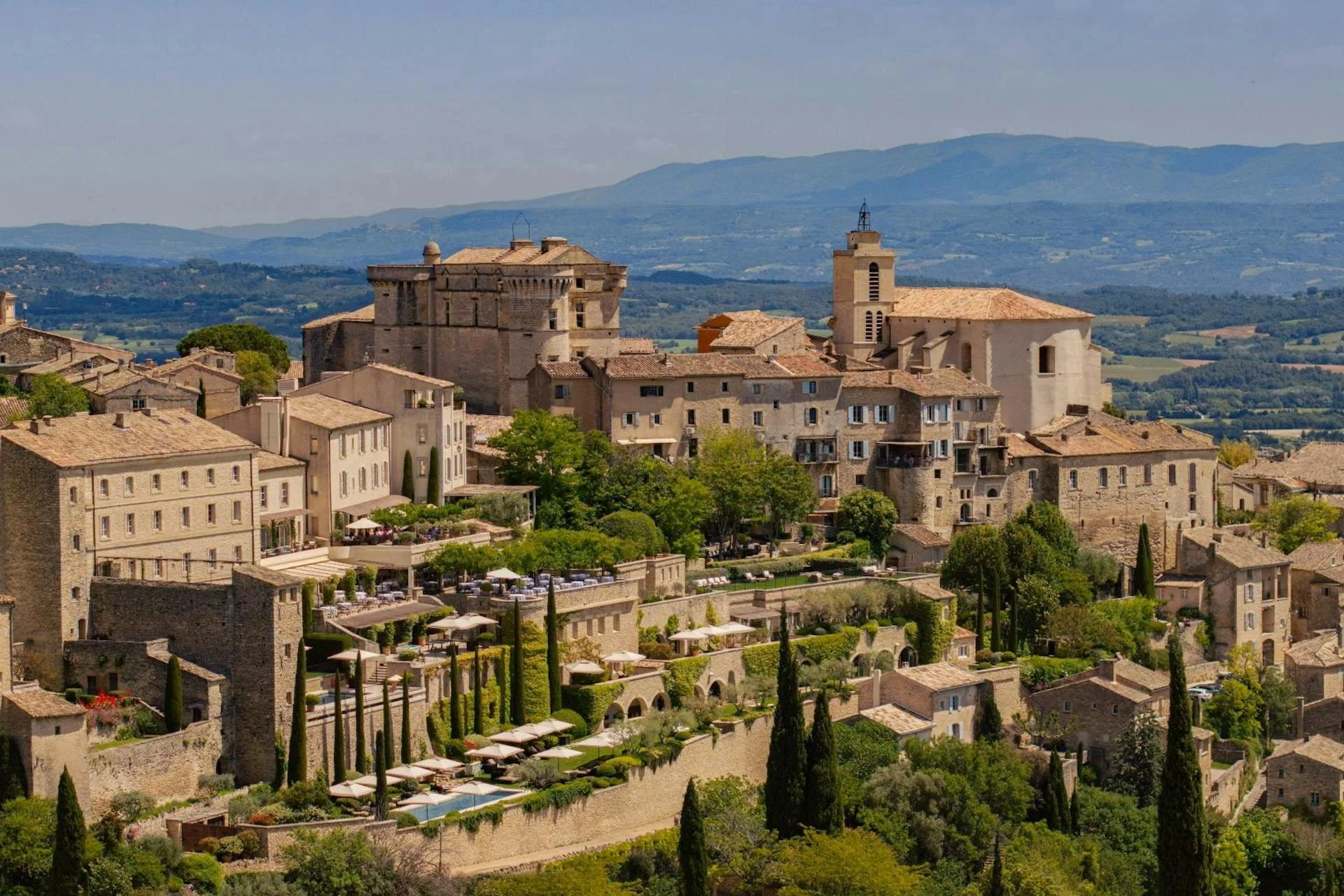
Tiered stone terraces and valley views at Airelles Gordes, La Bastide.
If you ask me for one hotel for a first luxury trip to Provence, this is probably where I begin. Airelles La Bastide sits directly inside Gordes overlooking the valley, which solves one of Provence’s recurring dilemmas: beautiful countryside hotel or beautiful village? Here you get both.
It works particularly well across generations. Couples get the romance of Gordes, while families get pools, service and enough hotel infrastructure to make a slower afternoon feel intentional. I do not need every day in Provence with children to become a cultural scavenger hunt. One village, one very good lunch and a pool is often exactly enough.
The tradeoff is that Gordes is the village everyone else has also chosen, and Airelles is the grandest, most ceremonious option in the area. Choose it if you want Provence to make an entrance.
Bonnieux: the quieter Luberon answer
Bonnieux is one of my favorite alternatives to Gordes because you still get the hill-village setting without quite as much feeling that everyone in Europe received the same itinerary.
It is also an excellent base. Ménerbes is nearby, Gordes and Roussillon make an easy outing, and Lourmarin sits across the Luberon for another day. Bonnieux itself has enough restaurants and life that it feels like somewhere to stay rather than simply admire.
Capelongue
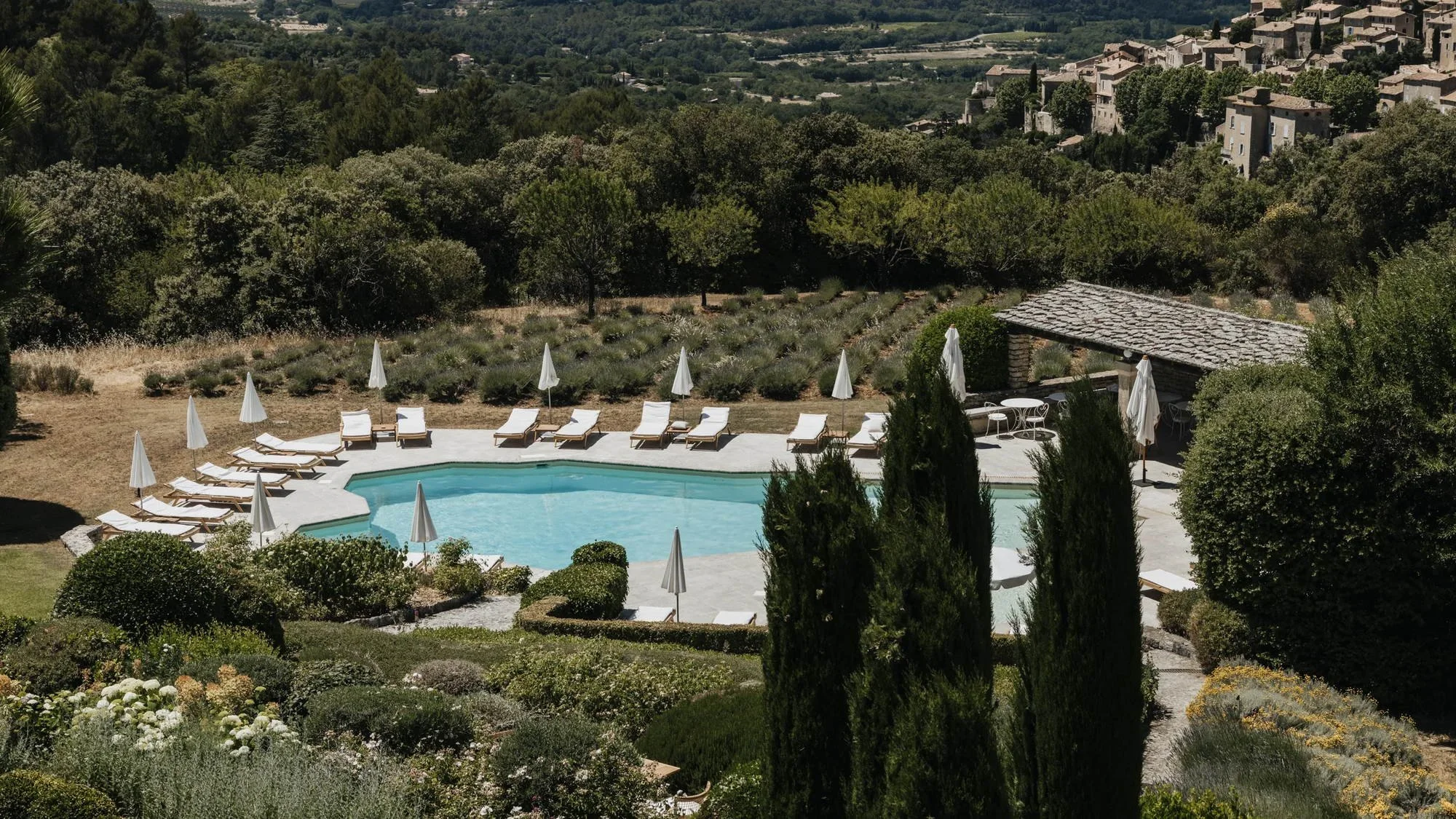
The secluded pool and lavender gardens at Capelongue facing Bonnieux.
Capelongue is what I would choose for someone who wants the Luberon without sleeping in its most famous village. It sits above Bonnieux with a much more relaxed country-hotel mood than Airelles. The detail I particularly like is that Bonnieux is walkable from the hotel, which is unusual enough in Provence to count as a meaningful amenity.
For couples, I might actually prefer it to Gordes on a longer stay because it feels easier. For families, the larger suite configurations can be particularly useful. There is no kids club, so this works better for families who expect to spend most of the trip together rather than parents looking for several hours of organized programming every day.
Choose Capelongue for the Luberon, good food, useful family space and a softer version of luxury.
What about Ménerbes, Roussillon and Lourmarin?
Ménerbes is beautifully positioned in the central Luberon and particularly appealing for villas, because you can have privacy without making the rest of the region inconvenient.
Roussillon is absolutely worth seeing for its ochre landscape, but I generally do not think everyone needs to sleep there. Visit, wander, have lunch, then continue enjoying the fact that your suitcase stayed in the same place.
Lourmarin sits farther south and has more year-round life. It can be an excellent answer if you want easier access toward Aix, or simply prefer a village that feels a little more lived in.
These are all very good options. That is why you need to choose one.
Coquillade Provence: for people who enjoy having things to do
Coquillade is the Luberon answer for people who love Provence but also like activities. There is a substantial spa, serious cycling infrastructure, a wine estate, pools and seasonal children’s programming. This is not the tiny romantic inn where the afternoon itinerary is largely to admire a stone wall.
I particularly like it for active families because everyone can do something different without requiring a family summit. One person can bike very enthusiastically. Another can go to the spa. Children can swim. Eventually everyone meets again at lunch looking rather pleased with their choices.
The tradeoff is that you are choosing an estate rather than a village, and every time you leave you will use a car. Choose Coquillade for active families, cycling and wellness.
The Alpilles: the Provence people often want to come back to
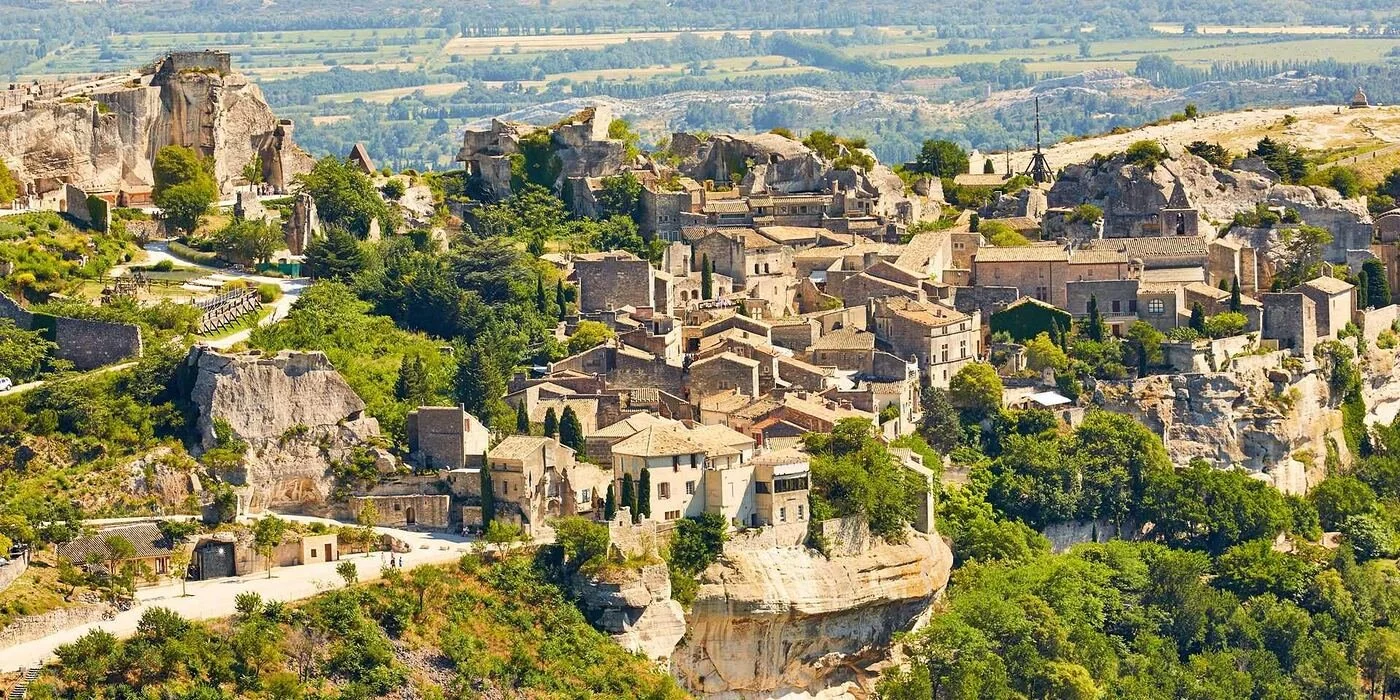
The dramatic rocky limestone scenery and medieval village of Les Baux-de-Provence.
West of the Luberon, the Alpilles feel different. The landscape is rockier, filled with olive groves and pale limestone, and the towns feel a little more lived-in. Saint-Rémy-de-Provence is the main base and an actual town, which I find particularly appealing on a longer stay, with restaurants, shops and a proper market.
Les Baux gives you the medieval village and Carrières de Lumières, while Eygalières and Maussane are quieter still. For a second Provence trip, especially if food, cycling or simply having more town life matters, I often prefer the Alpilles.
Not because they are objectively better. Because once you have already photographed Gordes, you may discover you would rather know where to have dinner in Saint-Rémy.
Saint-Rémy vs Les Baux
Choose Saint-Rémy if you want restaurants, shopping, the market and somewhere that feels good to actually live in for several days. Choose Les Baux if you want to stay on a beautiful estate and make the hotel a larger part of the experience.
For families, I would look especially closely at Domaine de Manville. For couples who ask about dinner before they ask about the room, Baumanière.
Domaine de Manville
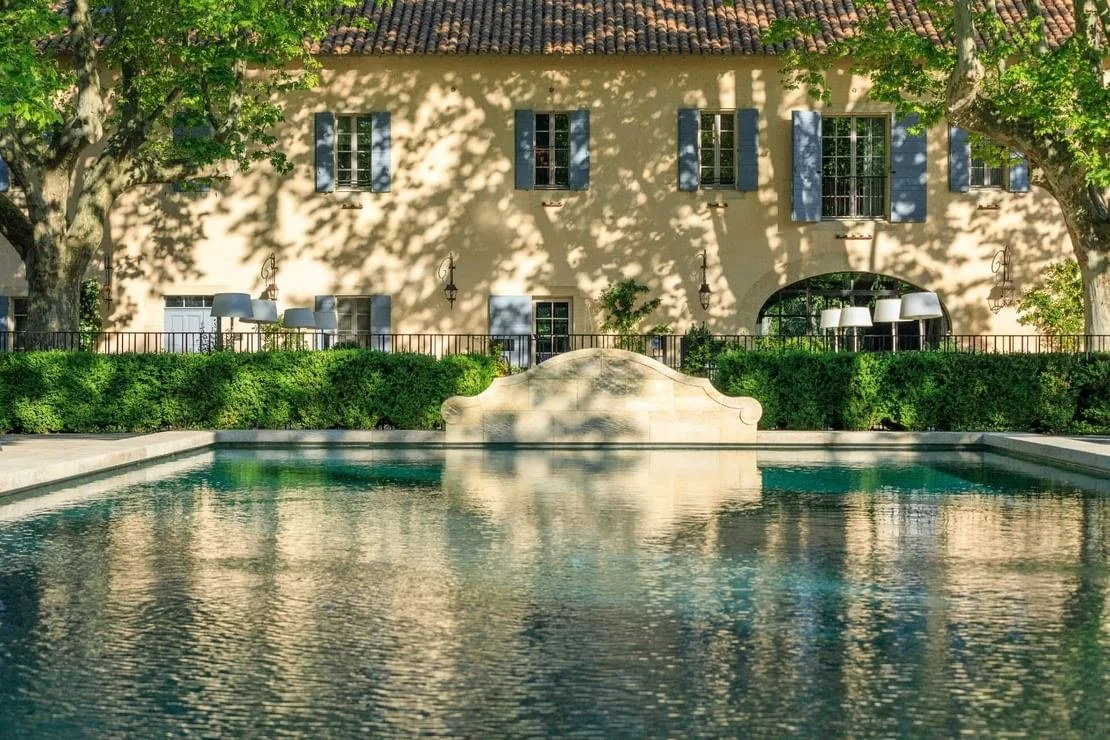
The tranquil pool and classic shuttered estate facade at Domaine de Manville.
Domaine de Manville is the Provence hotel I would show a family right before they decide they need to rent a villa. The property has traditional rooms and suites, but the real reason I like it is the three- and four-bedroom hotel houses. You get kitchens, living space and actual bedrooms while keeping the restaurants, spa, kids club, golf and hotel services around you.
That solves a very common family problem. People want villa space, and they also want breakfast to appear without anybody being responsible for it.
For two families traveling together or several generations, I would absolutely price Manville against a private villa before deciding. Choose it for families, groups, golf and longer stays.
See my Domaine de Manville guide →
Baumanière
Baumanière sits beneath Les Baux and is the clearest Provence choice when food is one of the reasons for the trip. The property has been run by the same family for generations, rooms are spread across several buildings, and L’Oustau de Baumanière is the major culinary draw.
The whole place feels less like a polished resort and more like an old Provençal institution that has had plenty of time to develop opinions. I would book it for couples, anniversaries and travelers who begin discussing dinner before they ask about the room.
Families can work here too, particularly in the larger private-house configuration, but Manville is the easier all-around family answer. Choose Baumanière for food, history and the Alpilles.
Luberon vs Alpilles
This is the Provence decision I would settle first, before you look at a single hotel photograph.
Side by side
| Luberon | Alpilles | |
|---|---|---|
| Best for | First visits, hill villages, classic scenery | Longer stays, food, art, cycling |
| Main bases | Gordes, Bonnieux, Ménerbes | Saint-Rémy, Les Baux |
| Family hotel | Airelles Gordes or Coquillade | Domaine de Manville |
| Couples hotel | Capelongue or Airelles | Baumanière |
| Villas | Excellent | Excellent |
| Mood | Provence as imagined | Provence as lived |
For a first trip, I give the Luberon a slight edge. For a second trip, I might send you directly to the Alpilles. With four nights, do not split them, because your romantic French vacation does not need two checkout times.
Aix and its countryside: art, architecture and an actual town
Aix is particularly personal for me because I lived there for a year, and it remains one of the places I would most happily return to without needing a list of things to accomplish.
It is also one of the best Provence bases for someone who likes restaurants, cafés, markets, art and the ability to walk somewhere in the evening. You can spend the morning following Cézanne around, sit somewhere for an unreasonable amount of time over coffee, and go to dinner without beginning the evening in a car.
Aix works particularly well for a shorter stay, or for travelers who love Provence but become slightly restless after several consecutive days in very small villages. I say that with affection. I love a medieval lane, and I also occasionally need a shoe store.
Villa La Coste
Villa La Coste sits within Château La Coste, an art and wine estate north of Aix where contemporary architecture, vineyards and site-specific art are spread throughout the landscape.
This is the Provence hotel for people who plan trips around museums, galleries and architecture. It is also one of the few hotels in the region where I would deliberately leave an entire day unscheduled, because the property itself is the activity.
It is not in a village and has no particular interest in pretending it is 1780. If that disappoints you, stay in Gordes. If that excites you, this may be the most interesting hotel in Provence.
Northern Vaucluse: Mont Ventoux, cycling and wine
North of the Luberon, Provence becomes quieter and Mont Ventoux begins dominating the landscape. This is wine country and cycling country, and I would think of it primarily for repeat visitors, couples and people who already know exactly why the words Mont Ventoux matter to them.
Hôtel Crillon le Brave
Crillon le Brave is woven into a small hilltop village at the foot of Ventoux rather than sitting on an isolated estate. The hotel feels quieter, more intimate and considerably less concerned with delivering the classic Luberon postcard.
I would choose it for cyclists, wine-focused couples and anyone who has already done Provence once and wants somewhere less obvious. Ventoux is one of cycling’s legendary climbs, which is either the entire reason for staying here or completely irrelevant depending on your marriage.
What about Avignon?
Avignon is useful, and that is not faint praise. If you are arriving by TGV, want a few days of history and restaurants, or need an easy beginning or end to the trip, it works beautifully. You can arrive from Paris, postpone the rental car and spend a couple of days walking.
What I would not do is use Avignon as the base for an entire week of countryside Provence and then drive out and back every day. Use it as bookends, not as the whole book.
Hotel or villa in Provence?
This is the question that decides more Provence trips than almost any hotel comparison. For couples, shorter stays and first visits, I usually prefer a hotel. For families, two families or several generations staying a week, I often prefer a well-chosen villa.
The reason is what Provence is actually good at, which is domestic life. A market in the morning, a kitchen you may or may not use, a pool from two until six, dinner later than intended. A house does that better than a hotel room.
But a villa is only more relaxing if you are honest about the service level you want. Without housekeeping, breakfast, a chef or concierge support, somebody in the group starts doing those jobs.
Sometimes that is exactly the vacation people want. Sometimes one person looks up on day three and realizes she has become the unpaid general manager of a very attractive house. I prefer to settle that question before booking.
There is also a middle ground, which is why Domaine de Manville matters. Its hotel houses give you much of the living space of a villa while keeping an actual hotel operation behind you, and for some families that is the answer.
The quick answer
| Hotel | Villa | |
|---|---|---|
| Stay length | Three to five nights | Seven or more |
| Best for | Couples, first trips | Families, groups, multigenerational |
| Breakfast | Appears | Depends on staffing |
| Pool | Shared | Usually private |
| Service | Built in | Depends on the house |
| Bedrooms | Can get complicated | Usually the advantage |
| Daily rhythm | Easier, more structured | Slower, more domestic |
| Kids club | Sometimes | No |
| My concern | Room configuration | Service level |
Which Provence base is right for your trip?
For a first trip, start in the Luberon. Choose Gordes if you want the icon, or Bonnieux if you want a quieter version of the same landscape. For a repeat trip, especially when food is a priority, look hard at the Alpilles and Saint-Rémy.
For families, decide what you need more: programming or bedrooms. Airelles Gordes, Coquillade and Manville are stronger for hotel infrastructure. Capelongue, Manville’s houses and private villas are stronger when actual sleeping space is the problem.
For couples, choose Baumanière if you are here to eat, Villa La Coste if art and design are the point, Crillon le Brave if you want wine and quiet, and Capelongue if you intend to explore all day and come back somewhere calm.
For two families or several generations staying a week, start with the villa conversation and then compare it with Manville’s houses.
How long should you stay in Provence?
Four nights is the minimum that feels worthwhile, and five or six is better. A full week is wonderful, especially in a villa, because Provence rewards staying put more than almost anywhere I plan.
The pleasure is knowing which bakery you like by Wednesday rather than being able to say you slept in four villages. If Provence is the inland half of a longer South of France trip, three or four nights can work beautifully after the coast.
When is the best time to visit Provence?
May, June and September are my favorite months for most clients. The days are long enough to be outside, the villages are lively without being completely overwhelmed, and lunches can occupy as much of the afternoon as necessary.
Lavender is generally a mid-June-to-late-July conversation in the Luberon and around Ventoux, but bloom and harvest dates vary by year and altitude. The fields are also not conveniently arranged outside every Luberon hotel, despite what Instagram has implied.
July and August work very well for families tied to school calendars. The trick is behaving like you are in Provence rather than trying to defeat the heat through determination. One village in the morning, long lunch, pool after two, no heroics.
September is particularly good for couples because the heat eases, harvest begins and the region feels calmer.
Do you need a car in Provence?
For most Provence trips, yes. Aix works without one for a few days and Avignon is an easy train arrival, but everywhere else, moving between villages, vineyards, markets and restaurants on your own schedule is part of the experience.
You can absolutely use private drivers, particularly for wine days or evenings. For a villa stay, I generally consider either a rental car or a regular driver arrangement essential.
Provence FAQs
How much should I budget for a luxury hotel in Provence?
Provence has a much wider price range than Saint-Tropez, which is one reason I like having several very different hotels to work with. Depending on the property and season, excellent five-star hotels can begin in the several-hundred-euro range, while the most sought-after Luberon hotels and suites can reach €1,000 to €2,000 or more per night in summer.
If you tell me your hotel budget early, I can usually tell you quickly whether we should be looking at Gordes, the Alpilles, a quieter hotel or a villa instead.
What budget should a family expect for Provence?
For a family, I care much more about the total accommodation cost than the hotel’s advertised starting rate. Two rooms, connecting rooms or a multi-bedroom suite can turn a five- or six-night stay into a five-figure hotel decision fairly quickly, particularly at the most sought-after properties in July and August.
This is also where Provence gets interesting, because a larger hotel residence or villa may make more sense. If a family is staying a week, I almost always want to compare the hotel number with a villa before deciding.
Can I do a luxury Provence trip for under €1,000 per night?
Yes, and much more realistically than peak Saint-Tropez. The key is not expecting every hotel on this page to fit that budget on every summer date. Provence has excellent five-star hotels that can fall below €1,000 per room per night, particularly outside the most expensive dates and room categories.
If your ceiling is firmly under €1,000, tell me upfront rather than spending the planning process trying to force Airelles Gordes or a particular summer suite into a number that does not make sense. Provence has enough excellent alternatives that we can usually make the budget work without making the trip feel like the consolation prize.
Where should I stay in Provence for the first time?
The Luberon. Choose Gordes for the full hilltop experience, or Bonnieux and Ménerbes for the same landscape with quieter evenings.
Luberon or Alpilles?
Choose the Luberon for a first trip and the classic village circuit. Choose the Alpilles for a repeat trip, food, cycling and a base that feels more lived in.
Gordes or Saint-Rémy?
Gordes is more dramatic and more visited. Saint-Rémy is easier to live in for a week, with restaurants, shops and a proper town rhythm.
Should I stay in a hotel or rent a villa?
For a week or longer, particularly with a family or group, I often prefer a serviced villa. For three to five nights, couples and first trips, a hotel usually makes more sense.
Which Provence hotel is best for families?
Domaine de Manville is particularly strong for space and larger family configurations, and Coquillade works well for active families in summer. Airelles Gordes has strong family infrastructure, while Capelongue has useful family suites without a kids club.
When is lavender season in Provence?
Generally from mid June through late July in the Luberon and around Ventoux, with timing varying by year and altitude. Plan an outing for it rather than assuming you will drive past the right field at the right moment.
How many nights do you need in Provence?
Four at minimum, five or six ideally. For a villa, I prefer a full week.
Plan it with me
Planning a trip to Provence?
Tell me who is traveling, your dates, how long you have and whether you want someone else making breakfast. I can settle the area first, then the hotel or villa, then the exact room or house, and tell you honestly which of the two real options fits.
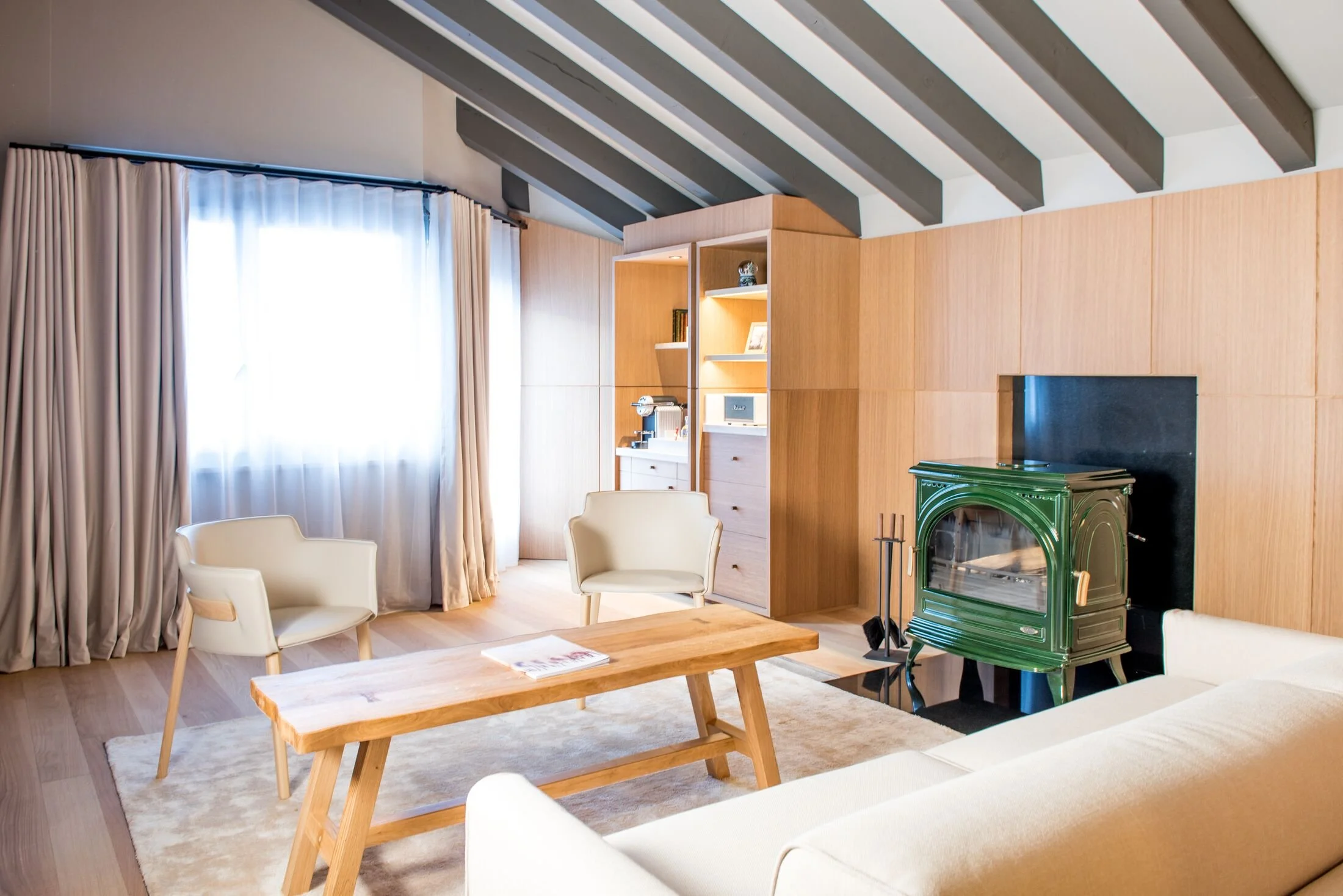
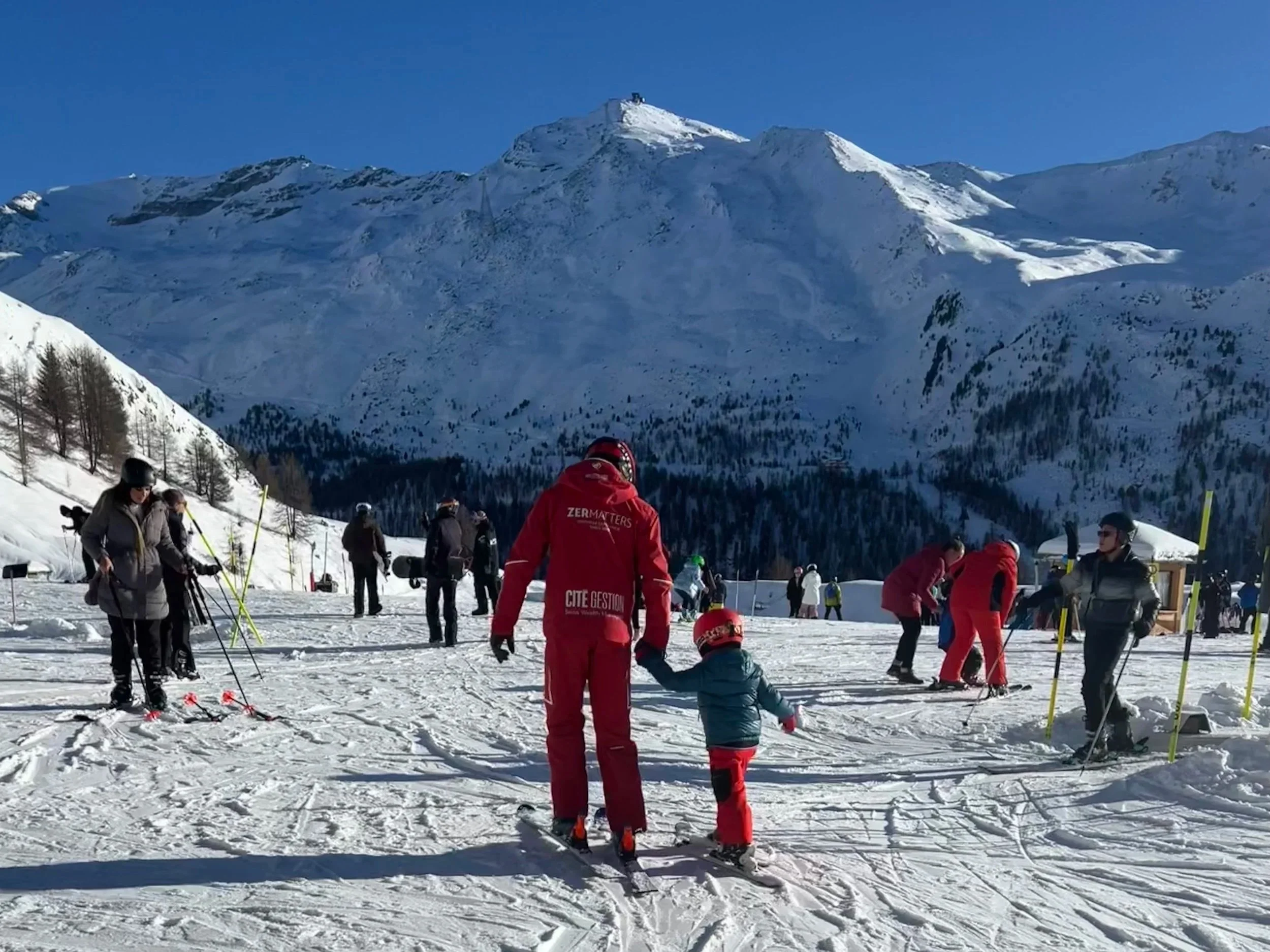

CERVO is Zermatt for travelers who want Matterhorn views, excellent ski access and a serious spa without the traditional grand-hotel formality. Here’s how I’d choose between Nomad, Alpinist, Huntsman and Overlook, plus who the hotel suits best.