

Updated September 2026
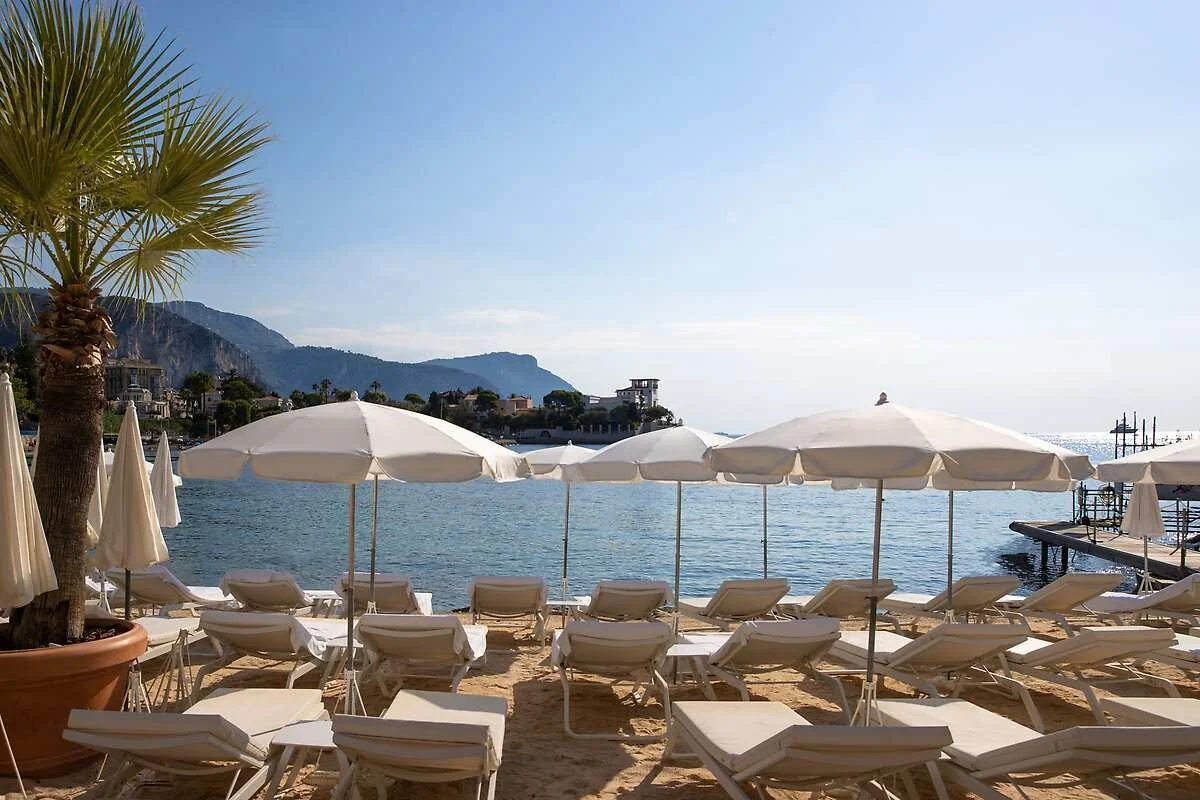
The rare private sandy beach setup at Royal-Riviera.
The French Riviera is compact enough to make you wildly overconfident when looking at Google Maps. Monaco, Cap-Ferrat, Nice, Antibes and Cannes all appear close enough that you briefly imagine breakfast in one, lunch in another and dinner somewhere else entirely. You actually can cover a surprising amount of this coast from one good base, but choosing the right one changes the trip far more than the mileage suggests.
I lived in Aix-en-Provence for a year and have planned many trips along the Riviera since, which has made me fairly opinionated about where to stay. On this part of the coast, geography matters almost as much as the hotel itself.
The useful questions are whether you want to walk to dinner, whether the children need a resort around them, whether Monaco is actually important to you, and whether your idea of the Mediterranean involves swimming in it or simply looking at it while someone brings you lunch. Also worth establishing early: whether the beach you saw in the hotel photographs contains any sand whatsoever.
All of these hotels are beautiful. Beauty is the easy part.
I plan the Riviera geography first, hotel second, room third. Saint-Tropez may sit on the same coastline, but in summer it operates almost like a destination with its own transportation policy, so I give it its own guide.
Still deciding between the Riviera, Saint-Tropez and Provence? Start with my South of France guide. If beach clubs, boats and long lunches are already calling your name, go straight to Saint-Tropez. If villages, markets, vineyards and villas sound more like the trip, head to Provence.
Where to stay in the South of France →
Where to stay in Saint-Tropez →
Where should you stay on the French Riviera?
If the resort itself should be one of the main events, start around Cap-Ferrat or Cap d’Antibes. If you want Monaco without sleeping inside Monaco, look above Roquebrune. If you want restaurants, art and the coast nearby but would rather end the day somewhere quiet, look inland.
The Riviera has quite a few correct answers. The point is finding the one that is correct for you.
What about Nice and Cannes?
Nice is the practical Riviera answer, and I mean that as a compliment. It has restaurants, museums, the Old Town, excellent train connections and the easiest airport logistics on the coast. If your priority is exploring rather than disappearing into a resort, staying in Nice can make complete sense.
For many of my luxury clients, though, I would rather stay somewhere like Cap-Ferrat and use Nice as somewhere to go. You still get museums, restaurants and an afternoon in the city, but you come home to a resort overlooking the Mediterranean rather than making the city itself the center of the trip.
Cannes is similar. Stay there if Cannes is actually what you want: shopping, restaurants, nightlife, events and an urban waterfront. If you mainly want access to Cannes but would rather sleep somewhere quieter, Antibes or Mougins often become more interesting.
I would never exclude either simply to prove I know a more obscure village. I just would not automatically sleep there because they are the names you recognized first.
First, the geography
One of the nicest things about the eastern Riviera is that you do not need to change hotels constantly. Menton, Monaco, Beaulieu-sur-Mer, Villefranche-sur-Mer, Nice, Antibes and Cannes are connected well enough that one good base can give you access to a large part of the coast.
Trains and private transfers make day trips easy, and there is no medal awarded for checking into three hotels in six nights.
Saint-Tropez is the exception. There is no train, summer traffic changes the calculation completely, and I would not plan repeated day trips there from Cap-Ferrat simply because the map claims the distance is reasonable. If Saint-Tropez matters, stay in Saint-Tropez.
Where to stay in Saint-Tropez →
Above Monaco: for design, views and dinner in Monte-Carlo
Monaco is worth wanting on its own terms. There are excellent restaurants, shopping, yachts and a concentration of polish so complete that even the parking garages seem better dressed than average. You do not, however, need to sleep there.
The Maybourne Riviera
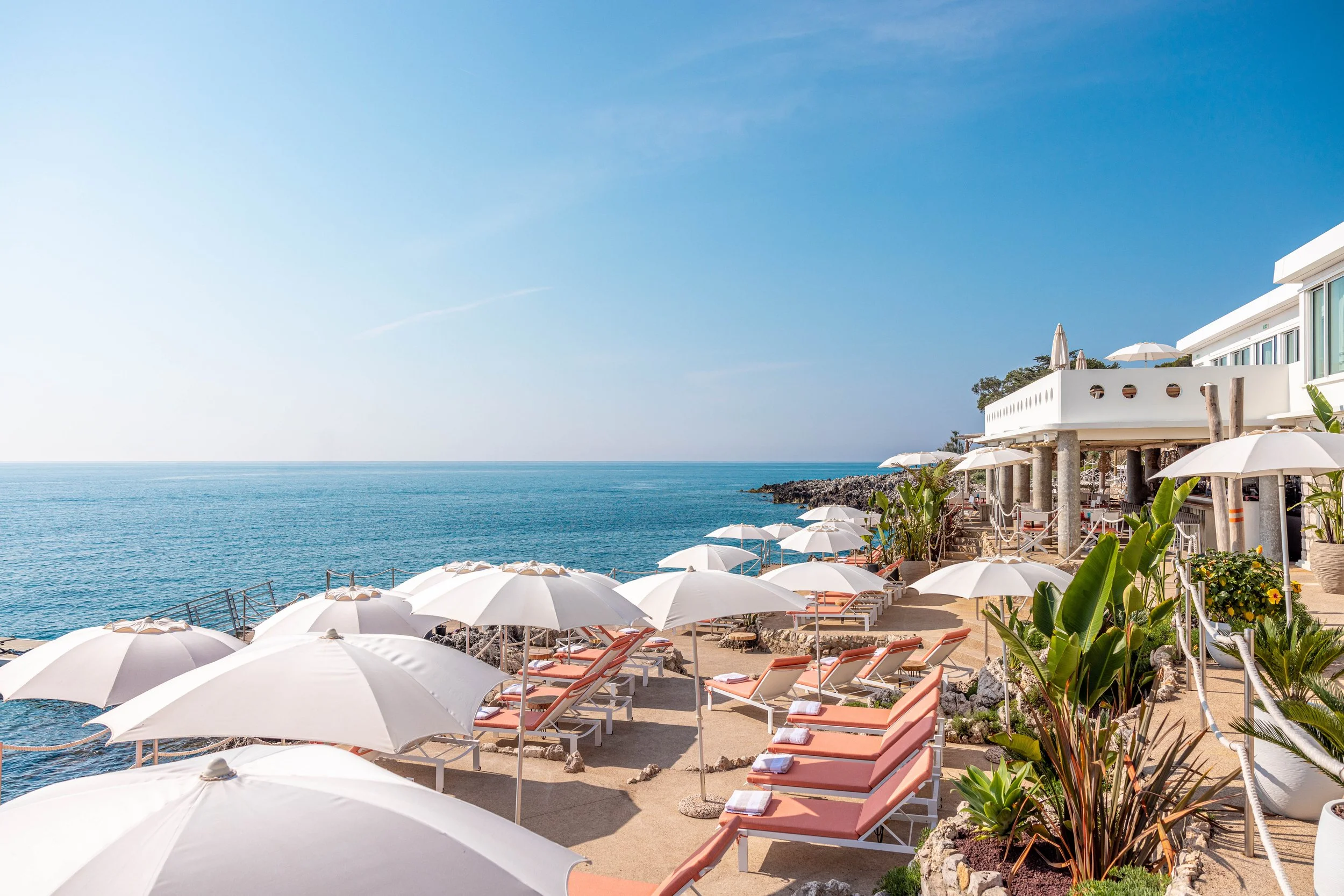
Cliffside ocean views from the terrace deck at The Maybourne Riviera. Image courtesy of Maybourne.
The Maybourne sits high above Roquebrune-Cap-Martin between Monaco and Menton and gives you a completely contemporary version of the Côte d’Azur. The architecture is dramatic, the hotel is oriented almost completely toward the Mediterranean, and the overall feeling is of being suspended above the Riviera rather than embedded in a village.
I choose it for couples, design-minded travelers and repeat visitors who have already done the traditional Riviera palace and want something with a stronger contemporary point of view. Monaco is close enough for dinner, but when you return, the hotel feels entirely removed from it.
Choose Maybourne if you want modern design, privacy, enormous views and Monaco nearby. Choose something else if you want a traditional Riviera hotel, a village outside the door, or a beach you can wander onto without involving hotel transportation.
See my Maybourne Riviera guide →
Saint-Jean-Cap-Ferrat: the classic Riviera answer
When someone asks me where I would start for a first luxury Riviera trip, Cap-Ferrat is very often the answer. The peninsula sits between Nice and Monaco and feels considerably quieter than either.
You can spend one day exploring the coast, another entirely at the hotel, and another doing almost nothing except reminding yourself that technically this is what you came to France to do.
It also works across generations unusually well. Couples can have a very romantic stay here, while families get enough space and resort infrastructure that nobody has to invent entertainment from scratch every morning. The real hotel decision is Grand-Hôtel du Cap-Ferrat versus Royal-Riviera, and they are not interchangeable.
Grand-Hôtel du Cap-Ferrat, A Four Seasons Hotel
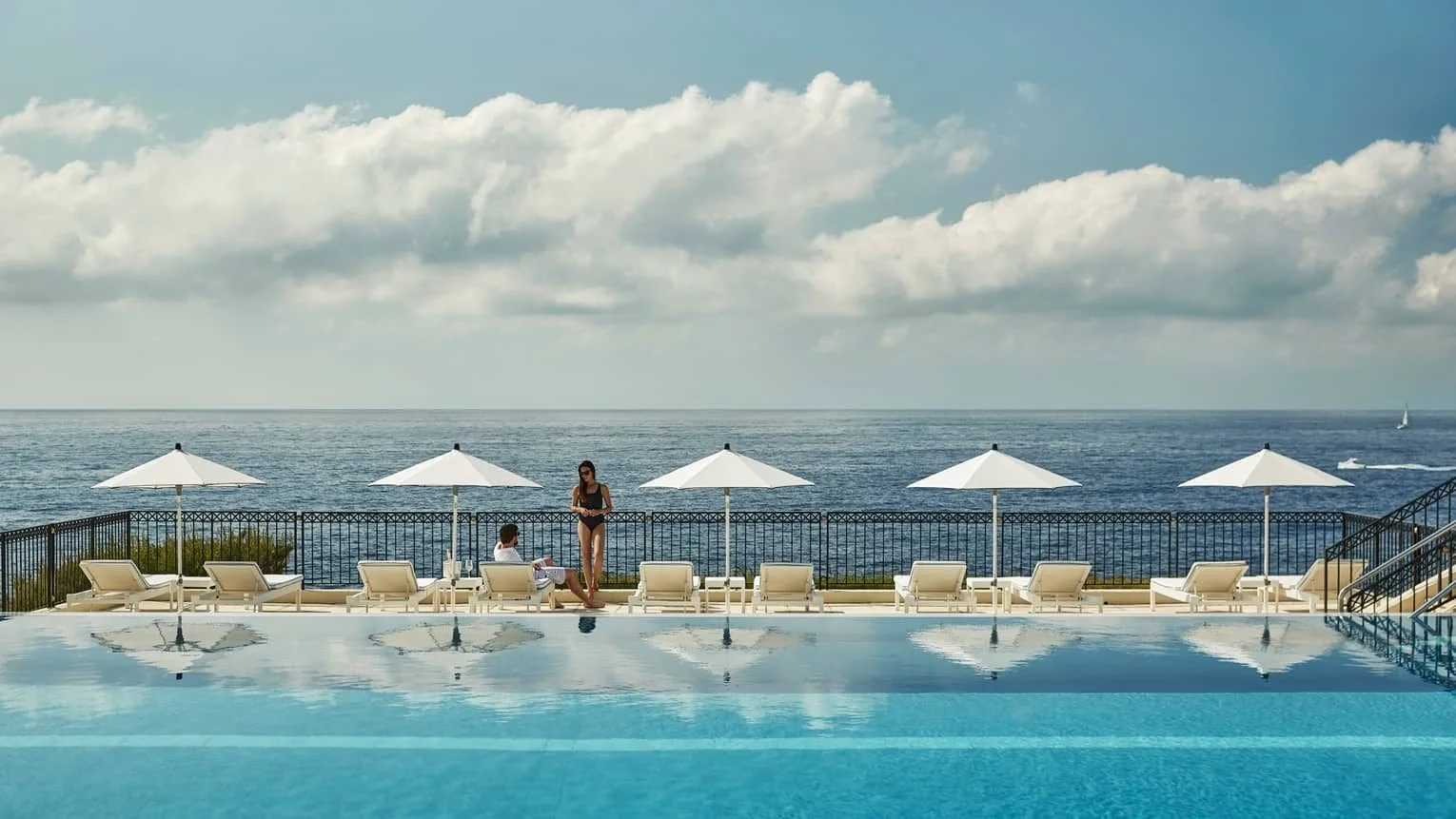
The iconic oceanfront infinity pool at Club Dauphin, Grand-Hôtel du Cap-Ferrat. Image courtesy of Four Seasons.
This is the full resort. The hotel sits within extensive Mediterranean gardens, and Club Dauphin is one of the reasons I choose it: the pool and sea setup feels like an entire Riviera day rather than simply somewhere to swim before going elsewhere.
For families, it is one of my strongest recommendations on the coast, because there is enough happening that staying at the hotel for the day counts as the plan. That becomes increasingly valuable around day four, when enthusiasm for another historical walking tour has begun to vary considerably by age.
As a Four Seasons Preferred Partner, I can book eligible stays with Preferred Partner benefits and work directly with the hotel on room selection, family configurations and requests before arrival. At a property like this the room decision matters, particularly for families who need connecting rooms or proper separation rather than a technically family-friendly room with nowhere to put anyone.
Choose Four Seasons if you want a destination resort and expect the hotel itself to occupy a meaningful part of the vacation. Choose Royal-Riviera if you want something smaller, easier and more connected to the world outside the hotel.
See my Grand-Hôtel du Cap-Ferrat guide →
Royal-Riviera
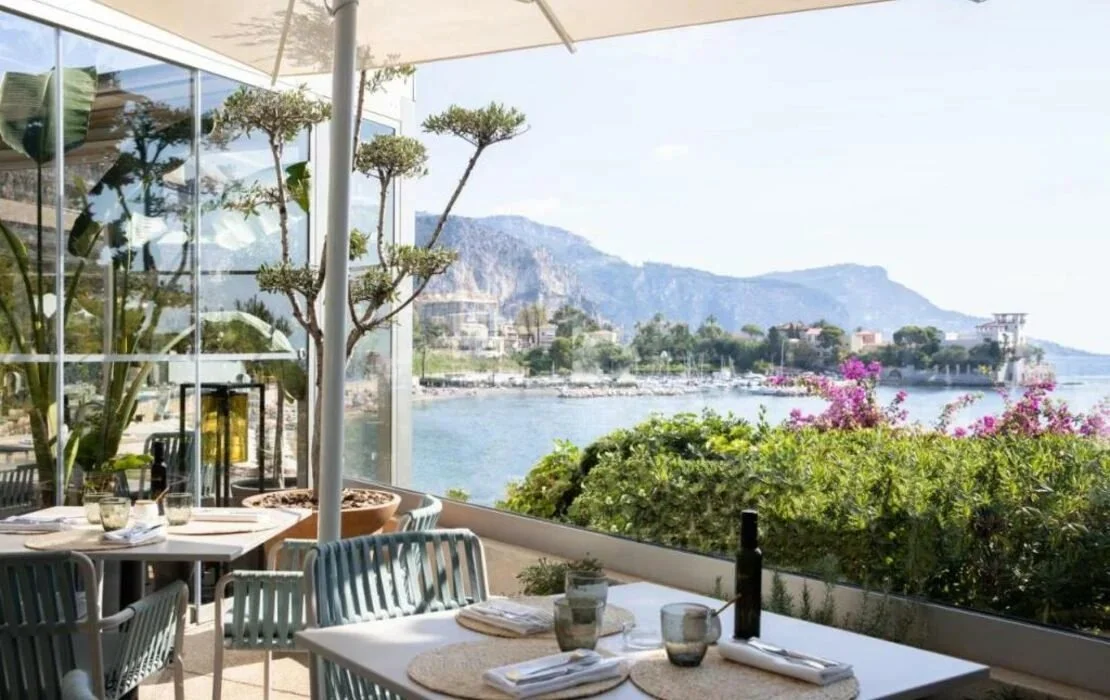
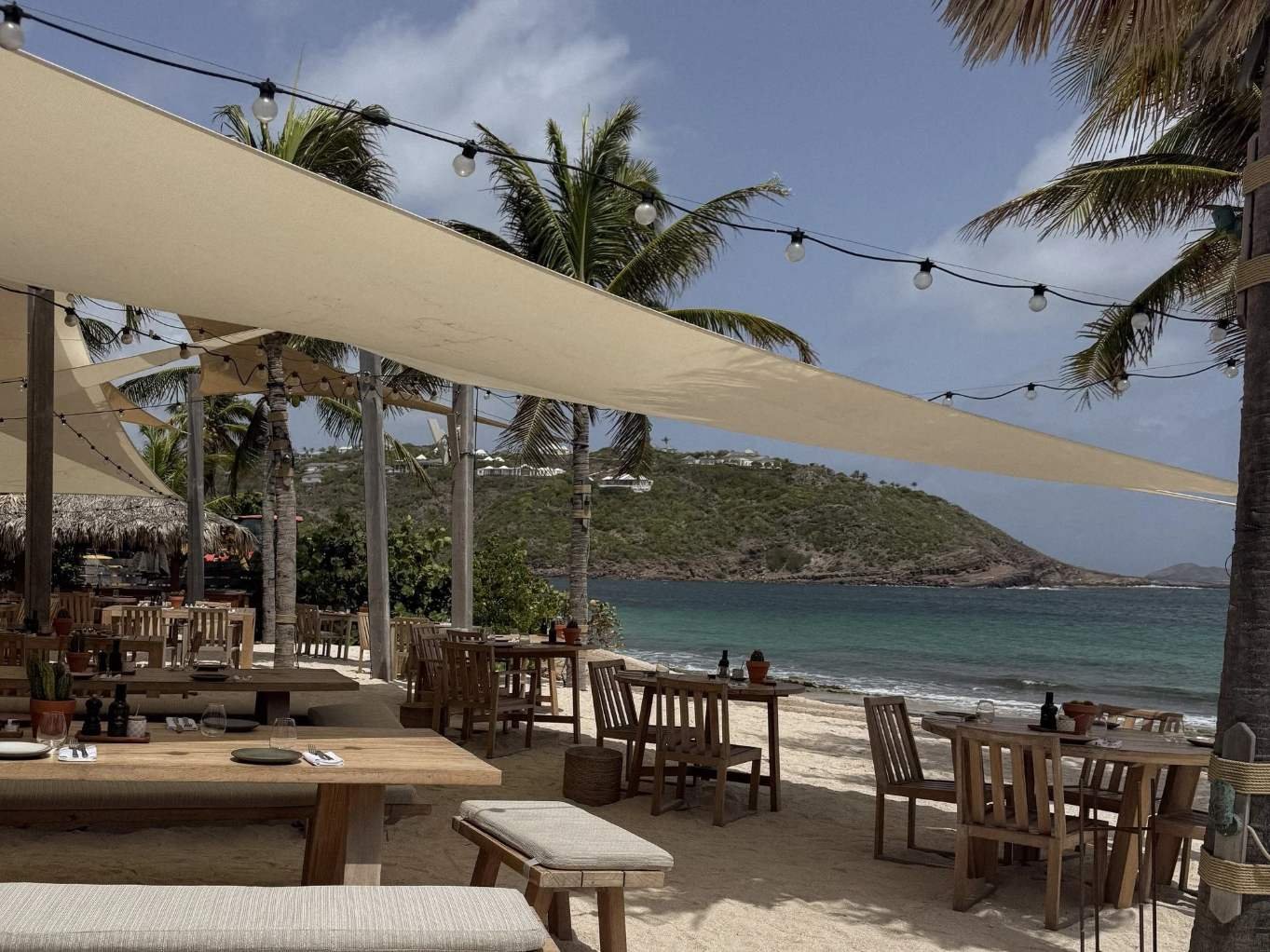
Outdoor terrace dining framed by coastal mountain and sea views at Royal-Riviera.
Royal-Riviera is the easier, smaller Cap-Ferrat answer, and I mean easy as a very significant luxury. It has a private sandy beach, a heated pool and a position near the entrance to the peninsula that puts Beaulieu-sur-Mer within walking distance.
You can have breakfast, swim, go somewhere for lunch and return later without needing a transportation strategy every time somebody changes her mind. I like it especially for couples who want a relaxed Riviera trip, and families who care more about beach access and exploring than having an enormous resort around them.
It is also a hotel I would price even if you assume Four Seasons is automatically the right answer. Depending on your dates and the room categories available, Royal-Riviera can represent a very different value proposition without giving up the location.
Choose Royal-Riviera if you want sand, walkability and ease. Choose Four Seasons if you want the hotel to be much more of the destination.
Grand-Hôtel du Cap-Ferrat vs Royal-Riviera
Neither is better. They solve different problems, and the rate sheet will not tell you which problem is yours.
If you tell me you want to spend half the day at the hotel, I lean Four Seasons. If you tell me you want breakfast, a swim and then to disappear somewhere else until dinner, Royal-Riviera gets much more interesting. This is exactly why simply comparing nightly rates does not tell you which one is the better value.
Cap d’Antibes: art, atmosphere and the legend
Antibes may be the best compromise on the coast for someone who wants real life around a serious hotel. There is the old town, the Provençal market, the Picasso Museum, restaurants and the sea.
Cap d’Antibes itself gives you the private estates and grand hotels that have been part of the Riviera mythology for generations. And then there is Eden-Roc.
Hôtel du Cap-Eden-Roc
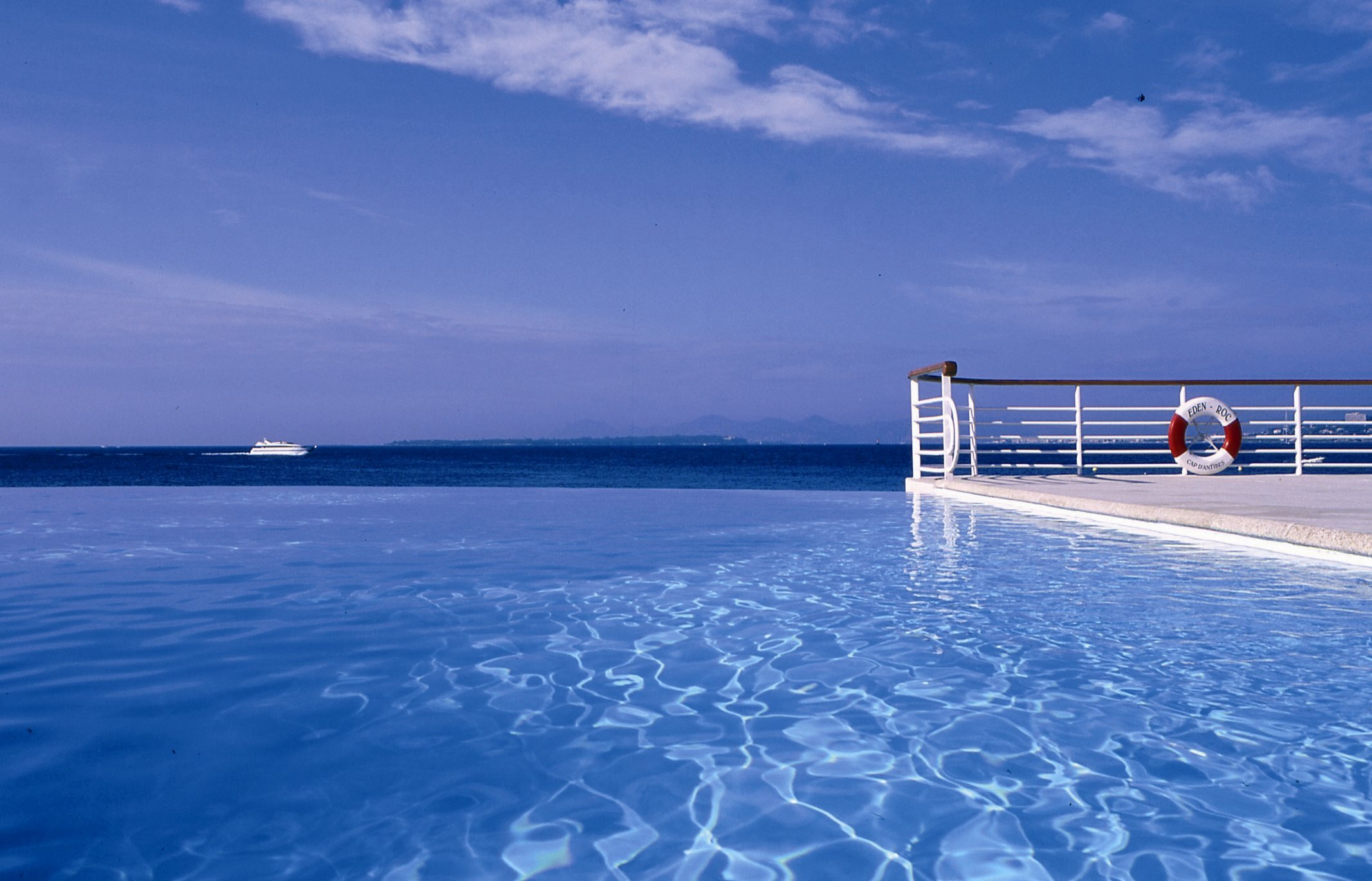
The legendary cliffside pool built directly into the rocks at Hôtel du Cap-Eden-Roc.
Eden-Roc is one of the few hotels where the mythology is genuinely part of the product. The long approach through the grounds, the Mediterranean at the end of it, the pool cut beside the sea, the history and the people-watching are all part of why you stay here. This is not a hotel I would reduce to a checklist of amenities, because that is not really what people are paying for.
I book it for honeymoons, anniversaries and milestone trips where saying you stayed at Eden-Roc is not incidental to the vacation. It is part of the vacation.
I would not automatically choose it for every first-time Riviera family simply because it has the biggest name on the coast. Room category matters enormously here, and so does being comfortable with what a legendary Riviera hotel costs in summer.
Choose Eden-Roc if you want the legend, the history and the sense of occasion. Choose Grand-Hôtel du Cap-Ferrat if a full resort and clearer family infrastructure matter more.
See my Hôtel du Cap-Eden-Roc guide →
A sea view is not the same thing as a beach
This sounds absurdly obvious until you start looking at Riviera hotel photography. Many of the most dramatic hotels on this coast sit above cliffs, rocks or seawalls. They have extraordinary Mediterranean views and access to the water, and no sand whatsoever. The pool is doing quite a lot of work in those photographs.
If walking directly onto sand matters to you, tell me early, because it narrows the list surprisingly quickly. Among the hotels in this guide, Royal-Riviera is the most straightforward answer.
This is exactly the sort of preference I like settling before the reservation rather than after everyone has unpacked and one child asks where the beach is.
Mougins and Vence: the Riviera without staring at the sea all day
The inland Riviera gets overlooked, and it suits far more people than it gets credit for. Half an hour from the water, the landscape starts turning Provençal, the evenings become quieter and the trip stops being organized around the beach.
I particularly like this option for art-focused trips, couples who intend to explore all day, and anyone combining the Riviera with Provence who wants the transition between the two to happen gradually rather than at highway speed.
Le Mas Candille
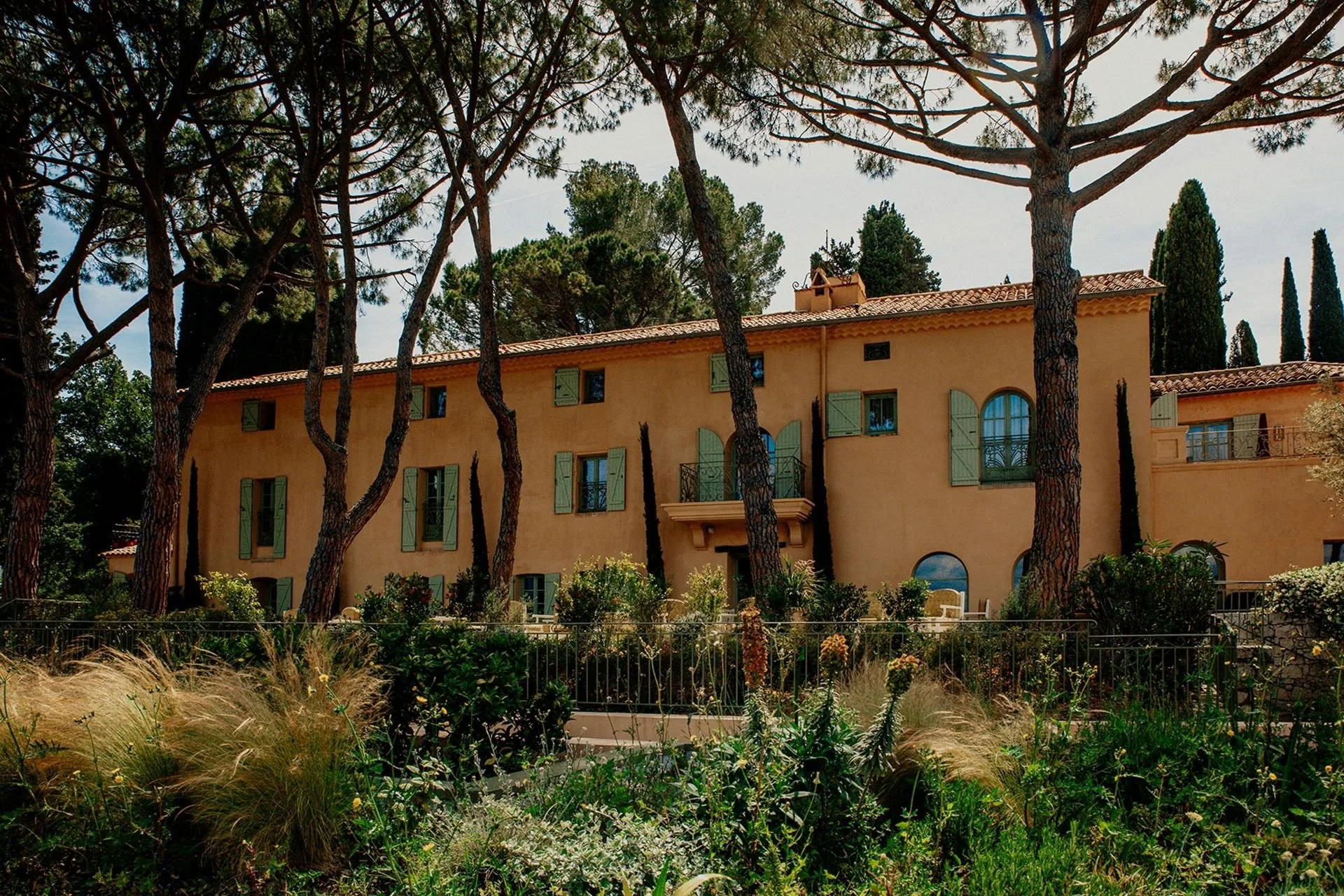
Provençal country estate luxury set among the pine-filled hills of Mougins at Le Mas Candille.
Le Mas Candille sits in Mougins, giving you Cannes and Antibes within reach while returning you to gardens, pools and a Clarins spa. The hotel was redesigned by Hugo Toro and feels much more like a contemporary country retreat than one of the grand coastal palaces, which is precisely why it belongs on this list rather than despite it.
I would choose it for someone who wants restaurants, art, exploring and a quieter place to return to at the end of the day. It can also represent much better value than the famous coastal hotels, particularly when the goal is experiencing the Riviera rather than spending most of the week inside the resort.
Choose Le Mas Candille if you want the Côte d’Azur close but do not need to wake up directly over the Mediterranean. Skip it if that sea view is the entire reason you came.
See my Le Mas Candille guide →
Château Saint-Martin & Spa
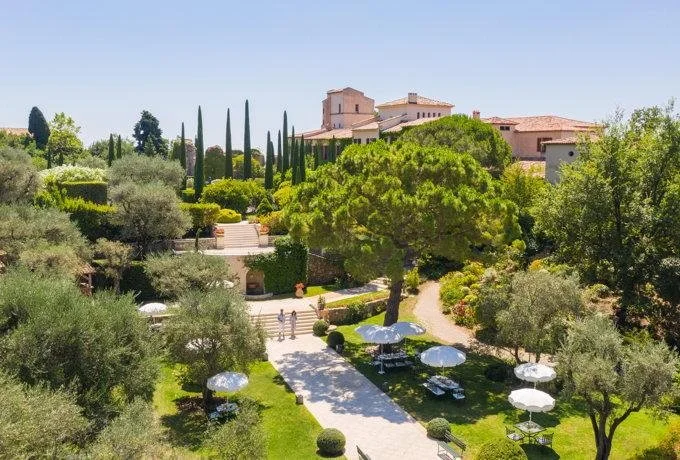
Hilltop garden pathways and olive trees leading up to Château Saint-Martin & Spa.
Château Saint-Martin sits high above Vence, surrounded by countryside with the sea in the distance. I particularly like it for romantic trips, wellness and travelers planning around Saint-Paul-de-Vence, Fondation Maeght and the art of this part of the Riviera. It gives you access to the coast without requiring the whole vacation to revolve around it.
It also works beautifully as a bridge into Provence. You have not technically left the Côte d’Azur, but the pace and the landscape have already begun changing.
Choose Château Saint-Martin if you want art, gardens, wellness and quiet. Choose the coast instead if swimming in the Mediterranean every day is non-negotiable.
See my Château Saint-Martin & Spa guide →
The Riviera hotels, by trip
If you still have six tabs open, this is where I would start. The table below is the short version, and the sections above are the reasoning behind it.
Can you do the French Riviera without a car?
On much of the eastern coast, yes. Monaco, Beaulieu, Villefranche, Nice, Antibes and Cannes are well enough connected that trains and private transfers can often replace a rental car, and for many of my clients having a car here creates more inconvenience than freedom.
Where you stay still decides how independent the trip feels. A hotel set apart from town means using hotel cars and transfers regularly, while Royal-Riviera gives you much more freedom on foot. Inland around Mougins or Vence, having a car becomes far more useful, because the whole point is being able to explore the surrounding towns and villages.
How many nights do you need on the French Riviera?
Four nights is enough for one well-chosen base. Five or six is better if you want genuine resort time as well as several days exploring. Seven works beautifully if you would rather unpack once and stop treating hotel changes as sightseeing.
What I would avoid is two nights in Nice, two in Monaco and two in Antibes simply because each one looked appealing online. This coast rewards choosing the right base far more than it rewards collecting room keys. If you are combining the Riviera with Provence or Saint-Tropez, that is when I would move.
See how I’d divide a longer South of France trip →
When should you visit the French Riviera?
June and September are the months I recommend most often. June gives you long days and the beginning of summer without quite the full intensity of July and August. September gives you a Mediterranean that has spent all summer warming up, while the roads and restaurants begin remembering what available space looks like.
July and August are absolutely right if you want the full Riviera summer. Rates are higher, restaurants are busier and the coast is operating at full volume. That does not make them bad months. It just means there should be no shocked expressions when the hotel quote arrives.
May can also be wonderful, particularly for art, walking and restaurants, but I always check dates around the Cannes Film Festival and the Monaco Grand Prix before congratulating anyone on discovering shoulder season.
Planning a French Riviera stay
The hard part of the Riviera is not finding a beautiful hotel, because all of these places are beautiful. The useful part is knowing which one creates the vacation you actually want.
What I pay attention to is the part a hotel gallery does not explain particularly well: whether you will actually use the resort, whether the family needs connecting rooms, how much transportation you are signing up for, whether you can walk to dinner, and whether your definition of beach agrees with the hotel’s.
I compare locations, room categories, family configurations and current offers, book through preferred partner programs where eligible, and work directly with the hotels on room selection and pre-arrival preferences. There is no planning fee for my hotel bookings.
You also do not need to figure out Cap-Ferrat versus Antibes before getting in touch. Send me your dates, who is traveling, your approximate hotel budget and two or three places you already like. I can usually make the list much shorter from there.
French Riviera FAQs
How much should I budget for a luxury hotel on the French Riviera?
It depends enormously on which Riviera you want. The famous coastal resorts and icons can easily move into four figures per night during summer, while smaller and inland five-star hotels can cost considerably less. For a June through September trip built around hotels such as Four Seasons, Maybourne or Eden-Roc, I would generally want you comfortable with roughly €1,000 to €2,500 or more per night for one room, knowing that the best dates, sea views and suites can go substantially higher.
If your budget is below that, it does not mean the Riviera is the wrong destination. It means I would look more closely at dates, Royal-Riviera, inland hotels such as Le Mas Candille or Château Saint-Martin, and whether spending less on the hotel gives you a better trip overall.
What hotel budget should a family expect on the French Riviera?
The important number for families is not the cheapest room displayed online. It is the cost of the configuration you actually need.
Two rooms, guaranteed connecting rooms or a multi-bedroom suite can quickly turn a five-night Riviera stay into a five-figure hotel expense, particularly at the major coastal resorts in July and August. If you are considering Four Seasons, Eden-Roc or Maybourne with several children, I would rather know your total hotel budget at the beginning, so I can compare sensible configurations instead of showing you an attractive nightly rate for a room that cannot accommodate your family.
Can I stay at a luxury hotel on the French Riviera for under €1,000 per night?
Yes, much more realistically than in peak Saint-Tropez, but I would be strategic about the hotel and the dates. Royal-Riviera can offer a different price conversation from the grand resorts, while Le Mas Candille and Château Saint-Martin give you excellent five-star options away from the most expensive strip of coastline. Shoulder-season dates can also materially change what your budget buys.
If your ceiling is firmly below that in July or August, tell me immediately. I would rather build around hotels where that budget has a realistic chance of buying a room you actually want than spend the whole process trying to squeeze you into an icon because its name appeared on a list.
Is Grand-Hôtel du Cap-Ferrat worth the price?
It is when you want a true resort and will use it. For a family planning pool time, hotel days and a significant amount of time on property, the value proposition is much easier to justify. If you plan to leave immediately after breakfast every morning and come back for bed, I would compare Royal-Riviera or another more exploration-friendly base before automatically spending more.
Is Hôtel du Cap-Eden-Roc worth the price?
For the right trip, yes. I think of Eden-Roc as a milestone hotel rather than simply a place to sleep on the Riviera, and the history, setting and sense of occasion are part of what you are paying for. If none of that matters to you and your priority is simply having a very good Riviera vacation, you do not need to stay there.
Is Cap-Ferrat better than Antibes?
Neither is better. Cap-Ferrat is quieter and more resort-oriented. Antibes gives you a stronger old town, art, restaurants and more activity immediately nearby.
Which French Riviera hotel is best for families?
Grand-Hôtel du Cap-Ferrat is my strongest all-around family choice on this stretch when the budget supports it and the family will use the resort. Royal-Riviera suits families who expect to be out exploring more often.
Which French Riviera hotel is best for a honeymoon?
Eden-Roc for the legend and the sense of occasion, Maybourne for contemporary design, and Château Saint-Martin for something quieter and more removed.
Which French Riviera hotel has an actual sandy beach?
Fewer than the photography suggests. Among the hotels in this guide, Royal-Riviera is the clearest answer if sand is important.
Do you need a car on the French Riviera?
Not necessarily along the eastern coast, where trains and private transfers work well. A car becomes much more useful if you are staying inland around Mougins or Vence.
How many nights do you need?
Four nights is a good minimum for one base. Five or six gives you enough time to combine resort days with exploring without turning the vacation into a schedule.
Is Saint-Tropez part of the French Riviera?
Yes geographically, but I plan it separately, because summer transportation makes it function like a different destination.
Where to go next
Where to stay in the South of France →
Where to stay in Saint-Tropez →
More from the blog
The best Four Seasons hotels in Europe →
Luxury spas in France with private suites →
Paris palace hotels, and what the Palace distinction means →
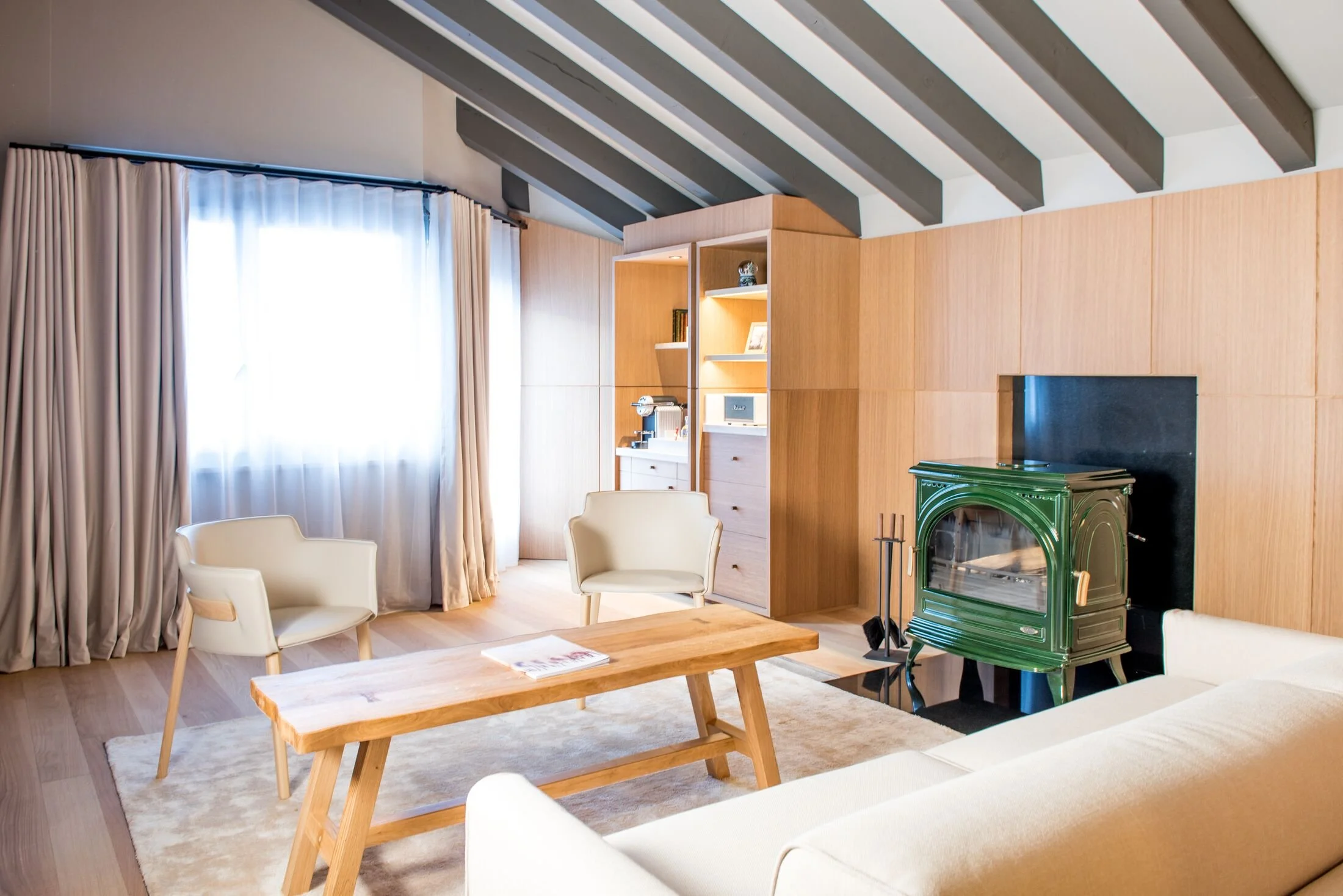


CERVO is Zermatt for travelers who want Matterhorn views, excellent ski access and a serious spa without the traditional grand-hotel formality. Here’s how I’d choose between Nomad, Alpinist, Huntsman and Overlook, plus who the hotel suits best.